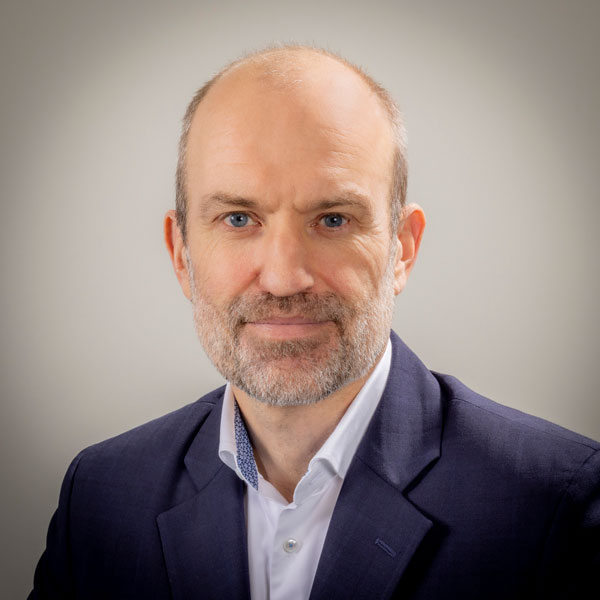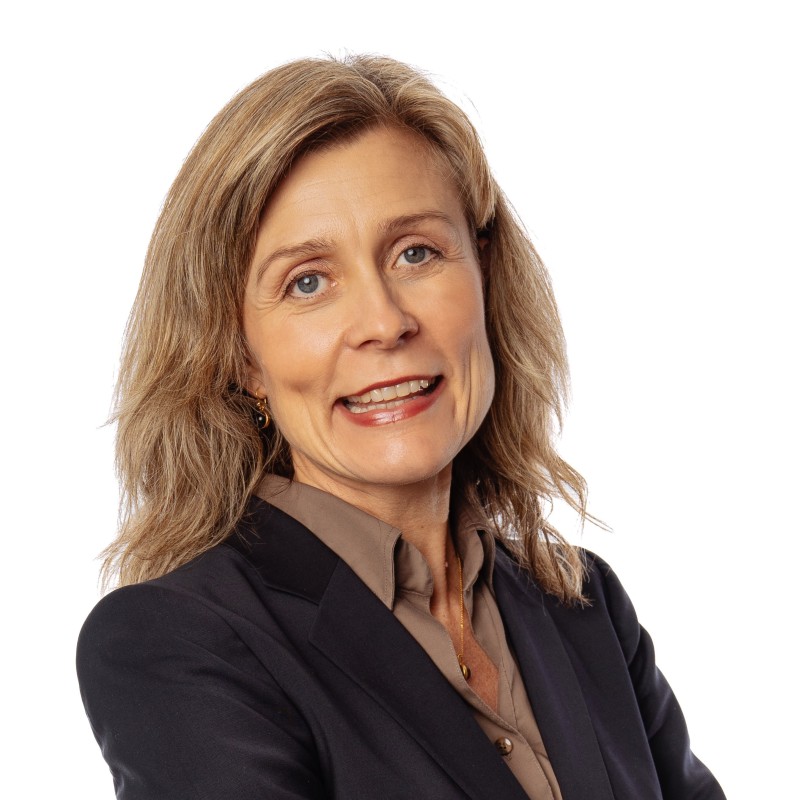


In this episode of PowerPod Presents: Offshore Wind Leaders, TGS 4C Managing Director Ivar Slengesol speaks with Margun Bjørnestad, CEO of Wergeland Group, about the industrialization of offshore wind, Norway’s competitive position, and what it will take for floating wind to move from demonstration projects to a commercially sustainable industry.
Intro (00:00):
Welcome to PowerPod, the renewable energy podcast from TGS 4C, a leading provider of offshore wind intelligence. In each episode, we explore the key developments shaping the offshore wind market and bring clarity to the biggest trends shaping the industry and the wider energy transition.
Ivar Slengesol (00:15):
Welcome to PowerPod Presents: Offshore Wind Leaders, the podcast where we speak with the people shaping the future of the offshore wind industry. I'm Ivar Slengesol, managing director of TGS 4C. Today I'm joined by Margunn Bjørnestad, CEO of Wergeland Group, a family-owned Norwegian industrial group that has established itself as an important player in offshore wind. From its industrial base at Gulen on Norway's west coast, Wergeland has been involved in several pioneering floating wind projects, including Hywind Tampen and most recently the Culzean floating wind pilot project. But floating wind is facing a difficult transition from ambitious targets and demonstration projects to a commercially competitive industry. What will it take to make that transition? How do you build an industrial business when future demand is uncertain? And can Norway turn its offshore expertise into a lasting competitive advantage? These are some of the questions we'll explore with Margunn today. Margunn, welcome to Offshore Wind Leaders.
Margunn Bjørnestad (01:14):
Thank you.
Ivar Slengesol (01:15):
Margunn, please introduce yourself briefly in 60 seconds, both professionally and personally, before we go into more details.
Margunn Bjørnestad (01:23):
Well, I spent much of my professional career in banking, 24 years leading different corporate regions and units before I moved into industry. I served as chair of Wergeland Group for almost 10 years, and when the question came to take an operational leadership role, I decided to make the move. Wergeland Group is a 70-year-old family-owned industrial group based here on the western coast of Norway. We have around 200 employees and operate across a broad range of industrial activities, 12 different business areas today. What I really enjoy is being close to where things happen, where decisions turn into projects, infrastructure, and jobs. Personally, I'm probably quite impatient. I like execution, I like seeing progress, and I believe very strongly in building businesses step-by-step, or as we say in Wergeland, brick-by-brick.
Ivar Slengesol (02:27):
Very good. As you said, you spent much of your career in banking before becoming CEO of Wergeland Group. What attracted you to make that transition, and how did it come about?
Margunn Bjørnestad (02:39):
Finance taught me a lot about risk, capital, and decision-making. But in industry, you see the consequences of decisions much more directly. You invest in quays, crane foundations, industrial areas, and a few years later you may have hundreds of people working there on a completely new project. I find it extremely motivating. The biggest transition for me was probably going from analyzing businesses to actually being responsible for making things happen.
Ivar Slengesol (03:15):
Talk a little bit about that transition from spreadsheets, simplifying it a bit, and looking at it from a distance from a banking perspective and as chair, to running the business. What you do involves a lot of physical movement and activity at the base.
Margunn Bjørnestad (03:35):
A lot of things are the same. It's about happy customers, risk awareness, margins, and always about people. But I can really see how much execution matters in this job. A glossy PowerPoint is nice, and a good strategy is important, but in industrial projects, the difference between success and failure often comes down to planning, logistics, safety, people, and of course thousands of small decisions made every day.
Ivar Slengesol (04:14):
Was there anything that surprised you with that transition, going from chair of the group for 10 years, where you knew the business quite well, to running the business on a day-to-day basis as CEO?
Margunn Bjørnestad (04:29):
It wasn't so surprising. As I said, it's a lot about people everywhere, margins, risk awareness, and that kind of work. But it's positive to see results every day much quicker. Because this is a compact group, we can make quicker decisions and make things happen. That's really interesting.
Ivar Slengesol (04:55):
It's a family-owned industrial group. Wergeland is about to turn 70 years old and has deep roots in a small community. How does that influence the way you run the business, and does family ownership allow you to take a longer-term perspective?
Margunn Bjørnestad (05:15):
Family ownership definitely gives us a long-term perspective. We don't think quarter-by-quarter or have to report to different banks, because the group is fully financed by equity, which gives us flexibility. Some of the infrastructure we build today may create value for decades. But being long-term does not mean ignoring profitability, quite the opposite, actually. If you want to build something to last, it has to be commercially sustainable every time. For us, there is no contradiction between creating shareholder value and creating local, profitable jobs. If we build competitive industrial activity here in Gulen, we create both. Located in a small community, we see the consequences and results of our decisions quickly. The people who work for us are also our neighbors in the region, and that creates a very strong sense of responsibility.
Ivar Slengesol (06:21):
How do you manage the balance between commercial returns and operating in a partly cyclical industry with ups and downs? How do you balance commercial returns with the ambition to create jobs and develop the local community?
Margunn Bjørnestad (06:40):
We have to focus on sustainable solutions in everything we do, and it has to be profitable. If it isn't, it won't be good for anyone. It is a balance, but it's the same interest for everyone.
Ivar Slengesol (06:58):
Let's talk more about Wergeland's strategy and business. Wergeland has evolved from a local industrial business into an important supplier to international offshore wind projects. You also serve other industries but talk about how you made that transition to offshore wind, how that strategic decision was made a few years ago, and why you chose offshore wind as one of your strategic growth areas.
Margunn Bjørnestad (07:30):
It was both strategic and opportunistic. We didn't wake up one morning and decided to become an offshore wind company. We already had the infrastructure: deep water, deepwater quays, heavy lifting capability, and logistics expertise built over decades of offshore experience. We have also built trust in the market. It started out with Hywind Tampen, where we served as the storage, assembly, and commissioning site for the 11 turbines. Right after, we moved into the next project: 36 bottom-fixed jackets from EnBW. Those were produced in Indonesia and transported to Wergeland base, where we had a marshaling yard. Then we had Hywind Scotland, with five turbines towed into Gulen from Scotland. Hywind Scotland is the first floating offshore wind farm in the world, and we handled a main component change. Most recently, we worked on the Culzean project, providing port infrastructure, base operations, project coordination, heavy lifting, local sourcing, and support services. It was a very interesting project and a pioneering pilot.
Ivar Slengesol (09:02):
You've been serving oil and gas for decades. How important was that experience for these pioneering floating wind projects, and what exactly did you do for them, starting with Hywind Tampen?
Margunn Bjørnestad (09:20):
The experience was really important because we had built diverse capabilities from offshore activities. But it's also important not to bring all the complexity of oil and gas into offshore wind, because we have to do things smarter and cheaper. Experience is vital, but you have to think differently at the same time.
Ivar Slengesol (09:47):
Can you give some examples of how you adapted to offshore wind?
Margunn Bjørnestad (09:53):
It's all about logistics, having efficient logistics at the quays. You must have good plans, communicate clearly, and foster a culture where people dare to ask questions, so things are done in the best way possible. That keeps the HSE culture as strong as possible. Moving forward, we want to be involved earlier in the planning phase. I think that's true across offshore wind. Early involvement leads to better overall project outcomes because we can establish a common plan.
Ivar Slengesol (10:35):
Gulen has become an offshore wind assembly and logistics hub. What makes you competitive for offshore wind, and what is your unique selling point?
Margunn Bjørnestad (10:48):
It's a combination of factors. First and foremost, we have a vast area, which is essential given the large dimensions of these components. We have a very deep fjord right outside, deepwater quays along our port, and high ground-bearing capacity for heavy lifting operations. We offer a sheltered area with a small tidal range. We have the organization, competence, infrastructure, experience, heavy-lift cranes, and wet storage capabilities, which we demonstrated during Hywind Tampen. Additionally, we are an ISPS-approved port, so security is well-managed.
Ivar Slengesol (11:42):
Those are quite a few unique features, particularly for floating wind projects.
Margunn Bjørnestad (11:48):
Absolutely. And we're only a few towing days away from the UK sector, so the market is huge, the entire North Sea is our market. The total area of our port is 2.4 million square meters, which is substantial.
Ivar Slengesol (12:08):
Having worked on four offshore wind projects, what have you learned from actually delivering these projects that developers and policymakers might not fully appreciate? How is working with offshore wind developers different from working in oil and gas or your other business lines?
Margunn Bjørnestad (12:35):
We have strengthened our offshore wind and complex operation capabilities. We've improved risk management, established key international partnerships, and supported local supply chain development, which is critical for building local competence. The main difference is that offshore wind is newer for everyone. At the same time, we shouldn't make it more difficult than it needs to be.
Ivar Slengesol (13:12):
Looking back at those four projects, what went particularly well, and what was more challenging or costly than expected?
Margunn Bjørnestad (13:28):
Most importantly, we have not had any serious injuries on any of the projects, which is always the top priority. We've also helped our customers succeed by finding better solutions during project execution. Collaboration before and during execution is vital. Going forward, taking down costs in both floating and bottom-fixed offshore wind is essential.
Ivar Slengesol (14:06):
Are there key learnings from these projects that you can apply to future projects, your fifth, sixth, and beyond?
Margunn Bjørnestad (14:18):
Absolutely. We have gained valuable experience and insights into the offshore wind industry that propel our further development. Bringing those lessons into new projects is essential as we hope to do much more offshore wind work.
Ivar Slengesol (14:38):
Can you share some of those key lessons?
Margunn Bjørnestad (14:42):
We've gained valuable experience in heavy lifting and complex operations. Handling huge, heavy components safely and efficiently is paramount. We've learned to manage and mitigate both economic and HSE risks effectively. We have built close partnerships with established international suppliers and clients, and we've contributed to local supply chain growth. As I often say, the devil is in the details, so you can't overlook those. Finally, it's all about people, building a strong culture, caring for team members, and ensuring everyone understands what to do and when to do it so the project succeeds.
Ivar Slengesol (15:40):
Offshore wind isn't your only segment. How do you decide how much capital and effort to commit to offshore wind when future project volumes remain uncertain and somewhat lumpy?
Margunn Bjørnestad (15:58):
I don't believe in betting the company on a forecast. I believe in investing when we see a combination of real customer dialogue, reusable infrastructure, and a credible market pipeline. The key distinction is between investments required for one specific project versus infrastructure that can serve offshore wind, oil and gas, maritime projects, and future decommissioning.
Ivar Slengesol (16:38):
Let's discuss the broader industry. Floating wind is often described as an industry waiting to scale. In your mind, what needs to change to make floating wind commercially competitive?
Margunn Bjørnestad (16:58):
It's largely about scaling. We need to stop treating every turbine as a prototype. The industry needs fewer one-offs, more standardization, larger production series, and industrialized assembly. We must shift from project thinking to production thinking, reaching factory-level manufacturing and assembly.
Ivar Slengesol (17:32):
What role can Wergeland play in that transition, particularly on the assembly side?
Margunn Bjørnestad (17:42):
We can help lower costs through industrialization, serial production, assembly, and integration. With serial production, we can utilize our storage area, quays, and cranes much more efficiently. We can streamline operations by learning continuously. By providing heavy-lift cranes at the port, developers avoid mobilizing new cranes every year. We bring established infrastructure, unique competence, and pre-invested assets to the table, with more investments to come.
Ivar Slengesol (18:32):
ow do you view the different floating foundation concepts, spars, semi-submersibles, etc.? How much does foundation variation affect your operations, and how important is foundation standardization?
Margunn Bjørnestad (18:55):
We can handle both floating and bottom-fixed projects. Initial competition between different foundation concepts was necessary for technological development. However, the industry now needs convergence. You cannot build an efficient industrial supply chain around dozens of completely different concepts.
Ivar Slengesol (19:28):
From a high level, what would a genuinely industrialized floating wind project look like?
Margunn Bjørnestad (19:38):
Maximizing standardization will drive costs down. Continuous learning along the way is key, and we are fully prepared to support that transition.
Ivar Slengesol (19:55):
Turning to your domestic market, Norway: we often hear that Norway can leverage its oil and gas expertise to lead in floating wind. Is that expertise a true competitive advantage, or does it risk bringing a high-cost mindset into offshore wind?
Margunn Bjørnestad (20:22):
Our offshore oil and gas experience provided strong foundational competence, but we must adopt a new mindset for offshore wind. We need to simplify processes and avoid unnecessary complexity.
Ivar Slengesol (20:46):
What must the Norwegian supply chain do differently to compete internationally? How competitive is the domestic supply chain overall?
Margunn Bjørnestad (21:02):
We have great potential to compete internationally. For us, the entire North Sea is our market. The UK is only a few towing days away, and Culzean is a prime example of Norwegian infrastructure supporting a British project. Similarly, Hywind Scotland was towed from Scotland to Gulen for main component work without issue. However, a strong domestic market is critical if Norway wants to build competence, reference projects, a sustainable supply chain, and profitable long-term jobs.
Ivar Slengesol (21:52):
You've been outspoken about Norway needing to move from studies and political discussions to concrete projects. What is the biggest risk of continued project delays in Norway?
Margunn Bjørnestad (22:12):
We lose valuable time, but more critically, we risk losing people and competence. Competence is built through real projects, not strategies. If projects don't materialize in Norway, engineers, suppliers, and capital will move to active markets. We don't need more ambitions; we need predictable project pipelines.
Ivar Slengesol (22:45):
Can Norwegian suppliers succeed internationally without a functioning home market?
Margunn Bjørnestad (22:55):
It will be much harder. While our company can take on UK projects, Norway as a nation needs a thriving home market to establish a strong domestic industry.
Ivar Slengesol (23:18):
What can the industry do to accelerate development and convince the public and politicians to move projects forward into construction?
Margunn Bjørnestad (23:35):
The winners will be companies that combine cost competitiveness with strong execution. Technology and scale matter, but ultimately, someone has to deliver projects safely, on time, and at the right cost.
Ivar Slengesol (23:58):
What specific actions should the industry take to build public and political support in Norway?
Margunn Bjørnestad (24:10):
We must educate the public, local communities, and stakeholders, while making offshore wind careers attractive to young people. Developing a skilled workforce is vital for the industry's future.
Ivar Slengesol (24:35):
Is the industry doing enough in workforce development and public engagement, or is there room for improvement?
Margunn Bjørnestad (24:48):
There is always room for improvement. While many are doing good work, overall competence development in Norway is not yet where it needs to be.
Ivar Slengesol (25:05):
Looking at ports and bases across Europe, many are investing heavily to capture offshore wind business. Is there a risk of overcapacity?
Margunn Bjørnestad (25:22):
There is a clear risk if every port attempts to build identical facilities. Offshore wind doesn't need every port to do everything; it needs specialized, complementary hubs. We should collaborate more across ports, regions, and countries. Culzean demonstrated how Norwegian port infrastructure can support UK energy projects. Wergeland Group has developed its industrial port over decades, which requires significant time and capital. That existing infrastructure allows us to step into new projects immediately.
Ivar Slengesol (26:15):
How could cross-port collaboration work across the North Sea region?
Margunn Bjørnestad (26:28):
We can collaborate by combining complementary strengths and shared learnings to advance the industry. At the same time, we must continue building our capabilities step-by-step.
Ivar Slengesol (26:50):
A steady project pipeline is essential to maintain workflow.
Margunn Bjørnestad (26:58):
Precisely. A clear, specified project pipeline is the most critical element for advancing the industry.
Ivar Slengesol (27:10):
Looking ahead 5 to 10 years to 2030 or 2035, what will distinguish the winners from the losers in the offshore wind supply chain? What must companies get right to succeed?
Margunn Bjørnestad (27:32):
Companies must be ready to execute projects. The winners will combine cost competitiveness with reliable execution. Infrastructure gets you into the game, but execution makes you a winner. Delivering safely, on time, and on budget is what counts.
Ivar Slengesol (28:02):
As a family-owned company, how do you compete against large international players in this evolving landscape?
Margunn Bjørnestad (28:18):
We don't need to be the largest. We must excel in our specific part of the value chain where we have a genuine competitive advantage.
Ivar Slengesol (28:35):
Having transitioned from banking and board leadership to operational management, what has that experience taught you about leading people through uncertainty?
Margunn Bjørnestad (28:54):
You must be honest about uncertainty without becoming paralyzed by it. People don't expect leaders to predict the future, but they expect us to make decisions, set direction, and take responsibility.
Ivar Slengesol (29:18):
When recruiting future leaders, what qualities do you prioritize?
Margunn Bjørnestad (29:28):
I look for engagement, ownership, curiosity, and execution, people who don't just identify problems, but take personal responsibility for solving them.
Ivar Slengesol (29:48):
The offshore wind industry still shares demographic similarities with oil and gas, with many middle-aged men in dark suits at industry events. What advice would you give a young woman aspiring to a leadership role in offshore wind?
Margunn Bjørnestad (30:15):
Just go for it! Don't wait until you feel 100% ready. Build your competence, understand the business drivers, ask questions, and take responsibility. Industrial leadership isn't about knowing every technical detail, it's about bringing good people together and making sound decisions.
Ivar Slengesol (30:45):
Do you see structural challenges for women entering leadership or joining the industry overall?
Margunn Bjørnestad (30:58):
I see more women entering offshore wind than traditional oil and gas, which is encouraging. We're seeing similar trends in education. The strong focus on sustainability also appeals to younger generations.
Ivar Slengesol (31:25):
If you could change one thing about the offshore wind industry tomorrow, what would it be?
Margunn Bjørnestad (31:38):
Predictability. Provide developers and the supply chain with a credible, transparent sequence of projects so we can plan and invest. The industry can handle commercial risk and competition; what hurts is stop-and-start policy. Predictability is vital for creating lasting, profitable jobs.
Ivar Slengesol (32:10):
You mean predictability in policy, project consenting, and bringing projects to final investment decision and construction?
Margunn Bjørnestad (32:22):
Yes, absolutely.
Ivar Slengesol (32:28):
Looking ahead to 2035, what would need to happen for you to declare Norway's offshore wind industry a success?
Margunn Bjørnestad (32:44):
Success means floating wind has become a commercial industry operating at scale rather than a collection of demonstration projects, with costs significantly reduced, Norwegian suppliers winning contracts globally, and young people choosing careers in the sector. If Norwegian companies thrive globally in 2035 based on the capabilities built in the 2020s, I would call that a true success.
Ivar Slengesol (33:22):
That's a clear vision for the decade ahead. Finally, what would you most like Wergeland Group to be remembered for under your leadership?
Margunn Bjørnestad (33:40):
I want us to be remembered for leaving the company stronger than we inherited it, developing our industrial site, building sustainable businesses, creating rewarding jobs, offering opportunities to young people, and having the courage to invest in the future. Wergeland has been built brick-by-brick for 70 years, and my responsibility is to ensure we keep building so the next generation inherits even greater opportunities.
Ivar Slengesol (34:20):
That long-term perspective exemplifies a family-owned business committed to its local community and the global floating wind industry. Congratulations on Wergeland's upcoming 70th anniversary, and thank you, Margunn, for sharing your insights on leadership, strategy, and the offshore wind market.
Margunn Bjørnestad (34:48):
Thank you.
Ivar Slengesol (34:50):
Thank you to our listeners for joining us for PowerPod Presents: Offshore Wind Leaders. Be sure to subscribe so you don't miss future conversations with leaders shaping the offshore wind industry. Until next time, thank you for listening, and goodbye.
Also available on:


The Host