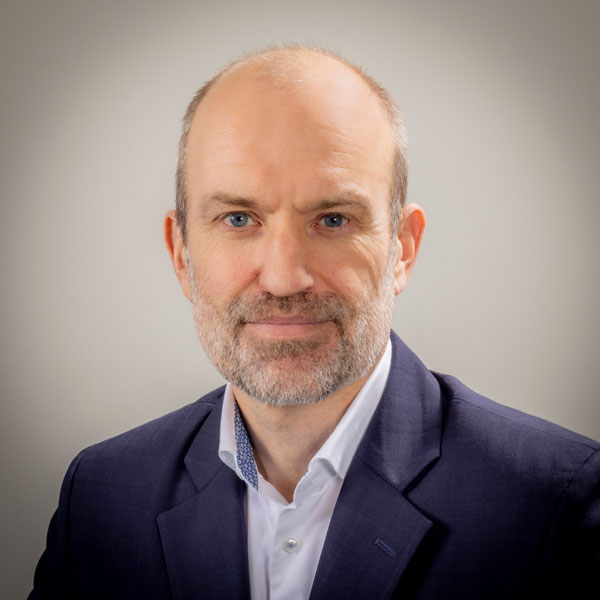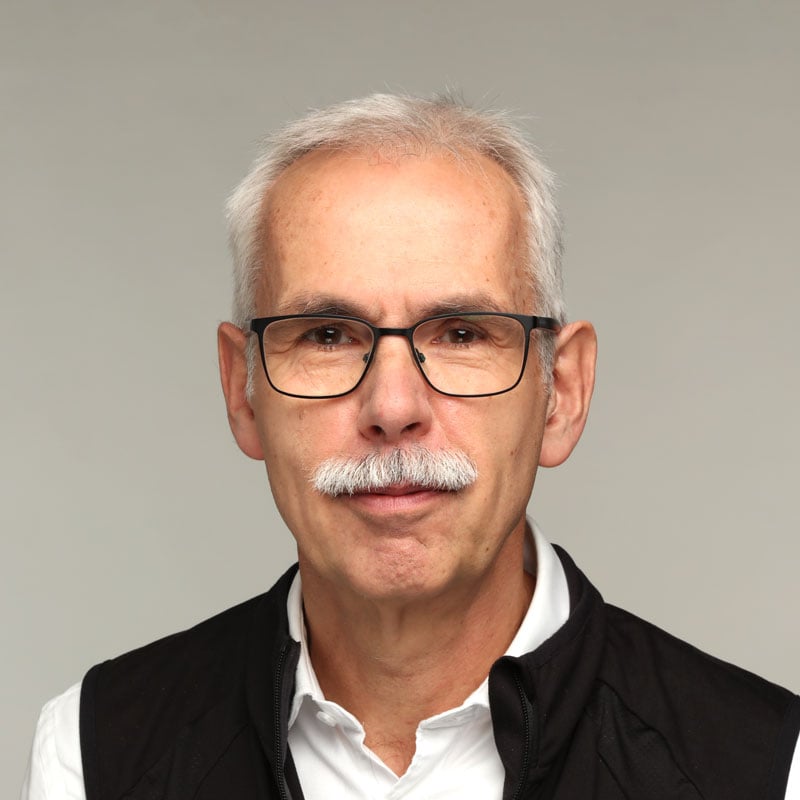


In this episode of Offshore Wind Leaders, host Ivar Slengesol speaks with offshore wind veteran Huub den Rooijen about the evolution of offshore wind, the growing need for data-driven marine planning, and the importance of balancing renewable energy development with environmental and stakeholder interests. He also highlights the key challenge facing floating wind: bridging the gap between ambitious deployment targets and commercially viable technology, calling for stronger international collaboration to unlock the sector's full potential.
Intro (00:00):
Welcome to PowerPod presents: Offshore Wind Leaders, a TGS 4C podcast series where we meet the people shaping the future of offshore wind. From developers and investors to technology providers, policymakers and industry innovators, we speak with the leaders making the decisions that will define this rapidly evolving industry. In each episode we go beyond the headlines to explore the strategies, decisions, and experiences behind the industry's biggest developments.
I'm your host, Ivar Slengesol, managing director of market intelligence provider TGS 4C, and this is Offshore Wind Leaders.
And a warm welcome today to our guest, Huub den Rooijen, a true industry veteran who's now an independent advisor. Welcome to the podcast, Huub.
Huub den Rooijen (00:52):
Well thank you very much, Ivar.
Ivar Slengesol (00:54):
So, you have close to a quarter-century experience in this industry, so we have a lot to talk about. And in addition, you have quite a few thoughts about the future of the industry as well, partly based on your experience, of course. So, what we will cover in this episode is the overall market developments in recent years and looking ahead, and we will also talk specifically about floating wind and what can be done to take floating wind from a demonstration stage to a commercial type of industry. So really look forward to going in depth into some of the key topics of the industry today, Huub. Before we get there though, could you please give us a 60-second short introduction of yourself professionally and personally?
Huub den Rooijen (01:48):
My journey in offshore wind started, indeed, as you said, well over a quarter of a century ago, when the first large projects offshore wind in the North Sea were being proposed. And at the time, I was working in Shell, and we had a small strategy group looking at future growth opportunities for the oil industry. And, of course, everything depends on how you view the energy industry. Do you say this is a hydrocarbon industry that's based on molecules, or do you see it as an energy industry where then electrons become an energy carrier as well? And it's been a struggle for the hydrocarbon industry over the years how they define themselves. And in my particular case in the late 90s, there was a real interest in the electrification of energy amongst the conventional oil and gas industry. And as a result, Shell gave us this opportunity with a few colleagues to do some initial projects, and we participated as Shell in a project that had been developed by an entrepreneur in the business, a company called Border Wind together with Powergen at the time. And that was two turbines in the North Sea. And as Shell, I thought that's a fantastic opportunity to join in a real project. My director at the time said, "Well, I can put money into an exploration well for oil and gas, or I can put a similar amount of money into Shell participating in the first offshore wind project in the North Sea." And that's what we did.
I also realize that you're asking me for a 60-second introduction. We're well beyond that, but suffice to say that from that moment, I didn't look back. I stuck with wind power, stuck with offshore wind power as the sector evolved. And after, in one of its strategic pivots, my lovely employer at the time Shell pivoted away from offshore wind, I stayed the course and worked with a new employer, and in the end was asked by The Crown Estate in the UK to head up their offshore wind division and later the entire marine division. And that's why I ended up spending most of my working life in the UK, and the last 10 years working with The Crown Estate. And since retiring from The Crown Estate, I'm an independent with a number of board positions and advisory positions, and having a whale of a time working with motivated people in one of the most inspiring industries that the energy world has to offer.
Ivar Slengesol (05:04):
Right. And on a personal basis?
Huub den Rooijen (05:06):
So, well, I've always felt that you need to pursue your passions. So, when I was young, I wanted to become an astronomer, so I went to university and I studied astrophysics, which is a great basis because it gets you mathematics and physics. Found my employment in Shell at the time and spent my life working in the Netherlands, in the US, in the UK, spending a lot of time in between the UK and the Netherlands these days. I'm married with the same lovely woman that I met at university, and we have two fantastic sons who are both working in the UK. And I think importantly, I've also become a granddad a few years ago. And that does—it's a cliché, but clichés are true—it does shape your personal perspective on the future, and whether you think about energy or you think about AI or any of the other big themes in our world, having that long-term perspective shapes your thinking.
Ivar Slengesol (06:24):
Yeah. And you certainly have the benefit of that long-term perspective. Talk a little bit about your experience at Shell, because you had some key roles there in managing some of the first offshore wind projects, particularly in the Netherlands and also in the UK.
Huub den Rooijen (06:41):
The three things for me working in Shell was A: the enormous power of a team of people. I was and have been always enormously privileged by working with discipline engineers from across a wide range of disciplines. So that's what these companies, that's what Shell brought us. If you needed a corrosion expert, or you needed someone with expert in safe lifting operations, or you needed someone to tell you about electrical engineering, Shell had this enormously wide range of in-house specialists, every single one of whom was very much enthusiastic to support. So the team spirit I think to me stands out.
The second bit is that when you do something new in one of these large companies, in many ways you are an entrepreneur. And you are not operating in an external environment; you're operating in an internal environment. So, the language that you use to talk to people to get your ideas promoted and supported is language that's quite well understood. So that is the second point.
And the third point is also the strategic struggle that large companies have. One of the big opportunities of course has been the electrification of energy. And the early projects offered us, the one in Blyth that we did the first two turbines in the North Sea, the one in the Netherlands, Noordzee Wind, Egmond an Zee, they were fantastic pathfinder projects from which the company and our supply chain and society took a large amount of learning. So, the experience that these projects generate to inform strategies, investment strategies and business strategies, is invaluable.
Ivar Slengesol (09:00):
So, talk a little bit about that. You headed up the Noordzee Wind joint venture, which was the project company owning Egmond aan Zee, Netherlands' first offshore wind park, and I guess was it in 2007 or 8 that project was opened? Talk a little bit about those experiences. I mean, because that was, like you say, a trailblazer project. It was, yeah, it was the first project in Netherlands, but it was actually also one of the first large-scale projects overall for the industry.
Huub den Rooijen (09:33):
Indeed it was. And 36 Vestas V90 turbines that are still generating power today. A joint venture between Vattenfall and Shell where I had the privilege of being the joint venture director, again working with a fantastic team. The key aspect of that project, and still relevant in the present day, is that it was set out as a demonstration project. And as such, it came with a very extensive monitoring and evaluation program. And that formed part of the site concession. So, we won the concession in a competitive tender that was run by the Dutch government. The tender was run in 2005, and the project was constructed by a combination of what is now Van Oord and Vestas in 2006, and the project was inaugurated early 2007. It was on time, broadly speaking, on budget, and without any LTIs. So, it was a massive success in that regard. But even more importantly, or equally important, is the fact that as a demonstration project, it had a multi-year program of information monitoring, analysis, and dissemination attached to it. And I believe that if you look at floating wind projects today, that's something that we can learn from, because the actual performance data of early wind farms are critical to inform supply chain where the value-add opportunities are. But I believe that these monitoring and evaluation programs are necessary to implement also in the early stage of the floating wind projects that we are considering.
Ivar Slengesol (11:46):
Right. That's definitely a topic that we will explore further in a few minutes. But before we do so, let's move on to your experience. So, you spent a good chunk of your career, I believe it's 25, 26 years at Shell, first oil and gas related and then of course offshore wind. And then you moved across the aisle, so to speak, and also across the Channel to The Crown Estate, so in the UK. So, talk about talk a little bit for those who may not know what role The Crown Estate plays in offshore wind in the UK. Please explain that and then talk a little bit about your experience at The Crown Estate.
Huub den Rooijen (12:28):
I joined The Crown Estate in order to help shape the delivery of their gigawatt-scale Round 3 offshore wind program. And The Crown Estate is the entity in the UK that owns the seabed around the country. It is a public entity in that it is accountable to Parliament, but it is run as a commercial business, i.e., as a for-profit business that is generating value for the country. And maybe the best thing to conceive of it is as a government department on its own that has the ability to act as a private business. And in The Crown Estate, you're accountable to Parliament, so in that sense, the work that you do, you seek to align with the interests of the country. And in the UK, The Crown Estate had launched Round 3, which, for those of your listeners who are in this industry a bit longer, may recall that at the time it was the biggest leasing round for seabed for offshore wind that had ever been orchestrated, and in the order of, well, 25, 30 gigawatts. It was quite a massive amount in a very early day.
And the fact that it did so was a masterstroke, but it was also driven by the recognition that in the UK, as in some other North Sea countries, we have this unique energy resource in offshore wind in that there are strong winds blowing over a sea with a very predictable, stable seabed that lends itself well to monopile foundations. It is a part of the world where there's enormous experience with offshore oil and gas industry, so you've got your prerequisites for a successful offshore wind sector laid out before you. And The Crown Estate were very keen to deliver this in an efficient and fast manner, recognizing that this could help drive the chain supply and social value across the country. And I have been working and leading the offshore wind team in The Crown Estate since 2012, and later became the director of the overall offshore marine business, which includes sectors like cables and pipelines, marine aggregates, sand, gravel, the coastal portfolio, which includes a number of ports, and it's a very diverse business that is set up as truly a company for the country looking to work with a wide range of stakeholders: local governments, national government, industry groups, environmental groups to create value from the economic development of the seabed.
Ivar Slengesol (15:50):
Yeah, so when you made that transition from Shell, where you had been then for more than 25 years, to The Crown Estate, what sort of parts of that experience from a large integrated energy company could you bring to The Crown Estate? And how was that transition?
Huub den Rooijen (16:11):
For governments, when you're working in government, there is always the challenge that your job is to create regulation. That's what civil servants do. And of course, you want to be successful in your job. We all want to be good in the work that we do, so you want to make regulations that business supports and that you can help to drive economic and social development. And, therefore, it's really important that from the inside out, when you make policies and when you work in a public body, you've got an instinctive understanding on how private business ticks.
And I think in my particular case, what I brought when I joined The Crown Estate, I brought knowledge on how a large energy corporate works and thinks, how they view safety, how they view capital approval processes, how they view the regulatory environment, what kind of risks are investable, financeable, what risks would better sit with the public sector. And I think I've been able to use that to help shape the policies that The Crown Estate set out in a way that worked with business and ultimately in the best interest of both society and business, because business is part of the solution, of course.
Ivar Slengesol (17:42):
So you spent more than a decade at The Crown Estate in different roles, like you said, and today you have three letters behind your name: CBE. So, explain that and the background for that acronym.
Huub den Rooijen (18:00):
Well, thank you for embarrassing me on that, Ivar. It is something very British and very close to my heart. I can tell you what happened in my case. I just received a letter out of the blue, and it said His Majesty has the intention of appointing you as a CBE. And that means Commander of the British Empire. It's one of those honorary awards. And when you read that letter, it comes as a bolt from the blue. I hadn't expected anything, and then suddenly you receive such a very official letter, and basically it says, "Would you accept?" And it brought tears to my eyes because it's an enormous sign of recognition. And the bit that made me feel really good is it is for renewable energy and environmental protection. And it's the second bit that was really important, because in The Crown Estate, we have worked so hard on making sure that this enormous energy transition towards offshore wind is something that can coexist with the natural environment.
Ecological systems offshore are enormously under pressure when you talk about the fish, the mammals, seabirds, coastal ecosystems, enormous pressure. And it is essential that when you plonk a big amount of hardware into that system, that you do so in a way that is ecologically sound. So together with a colleague in The Crown Estate, we initiated something that is now called the Offshore Wind Evidence and Change Programme. And in fact, if you go to The Crown Estate website, you can see the annual report of the Offshore Wind Evidence and Change Programme, and you can download it for free. And what it is, OWEC, as we call it, is effectively a collaboration of 26 large bodies in the UK: statutory bodies like the navigation safety institute called Trinity House, and government departments, but also industry. So, industry bodies are part of it, environmental NGOs, entity called the Wildlife Trusts is part of it. So, what you get is you effectively get a brain trust of people recognizing the enormous transition that's happening offshore and saying, "What is the evidence that we need collectively to be able to make the right decisions?"
Because without data, you can't make decisions. And OWEC was purposefully set up and is funded by The Crown Estate, now with a total of £50 million. It was purposefully set up to identify where we have lacunae, where we have gaps in our understanding, and then to run programs to address those funding gaps. And it's executing a wide range of collaborative, ecological, environmental, but also navigation safety studies, the effects of buried electric cables on electromagnetic field-sensitive fish species, etc. Everything that you can think of is something that you want to know as a developer in order to develop your project or as a government official in order to assess environmental impact. All the gaps that you can identify, OWEC aims to address. And setting up that structure, I felt was the second pillar for a successful wind deployment, because not only is what we need to do needs to be attractive for developers, for offshore wind developers and investors, it also needs to be acceptable to broader society, to the fishing sector, to ecologists. And OWEC in that sense forms the second pillar that is supporting the UK's long-term wind power push. And the fact that was recognized in that CBE, I thought it was just marvelous.
Ivar Slengesol (22:38):
An important holistic view on offshore wind development. And of course, the UK is the leading offshore wind market and has been so since the beginning, outside of China, in terms of operational capacity. And when you were at The Crown Estate, you talked about the sea becoming an increasingly crowded place, and this is related, I think, to what you just discussed with offshore wind, CCS, shipping, environmental concerns, nature, and other types of users. And how did you see that when you were at The Crown Estate, and couple that with what you just talked about: the need for data and the need for understanding the impact of the various use of the sea? Obviously, The Crown Estate has awarded enormous areas around the UK to offshore wind, and there's a new leasing round coming up soon in the North East outside the North East of England. So, talk a little bit about that sort of coexistence and the need for data.
Huub den Rooijen (23:46):
One good example is the fishing sector. And it's always an emotive sector, and I do some work with other organizations where we operate in places like Japan or the Philippines or Brazil, and you always see the fishing sector as being a key stakeholder in this business. Now let's look at the UK. We have a, and I prefer to call it a marine protein sector, that needs to coexist with a marine energy sector. So offshore wind energy from the marine space and food from the marine space are both critically important, because in the end, we need to feed ourselves. And in order to make the right decisions about where wind farms can be developed responsibly and how the fishing sector can continue to source marine protein, and where they can fish — these are quite detailed conversations. The sea spaces around our countries, and that's the same whether you're in Norway, the Netherlands, the UK, everywhere, they're very varied.
And understanding where good fishing grounds are, understanding how you integrate wind farm designs, cable export route designs, marine aggregate extraction spaces, how you integrate all of that in such a way that the individual sectors are recognized, that is a multidimensional, highly data-dependent optimization problem. And for that, you need to have data. And my concern is that we in a way have become—that's maybe a separate discussion topic—but we have become somewhat taken with our own success, and we start to take it for granted that this will happen by responsible developers. But as the marine space gets ever more crowded, what you need is the moral authority to say, "Here is where wind farms are going to be. We are going to reserve this bit for cables, that bit is for our seafood." And that really requires a strategic discussion at national level about how we wish to use our marine spaces. Hence, marine spatial planning is such a powerful and essential tool.
Ivar Slengesol (26:40):
So, expand a little bit on that, and who, in your mind, should do the different parts here? What is the optimal division of labor? So, if you look at the ecosystem, obviously you have the stakeholders, whether it's offshore wind, fishery industry, oil and gas, shipping, etc. Then you have providers of data and market intelligence like ourselves, TGS. You have the government, of course, government agencies, and you have industry associations. So, what's the optimal division of labor to get an efficient process towards an outcome that everybody can live with?
Huub den Rooijen (27:20):
Yeah. And I think that is the right question, Ivar. It's clear that there is a big problem to be solved: who is going to be doing what? And the analogy is maybe with how we develop new housing estates on land, or how we do urban regeneration projects. There is the moral authority required to do the broad allocation that says, "This is what we're going to be doing." So if I can use the housing development as an example, we are going to build 1,200 new homes in this area, and the area boundary is quite well defined, the amenities are quite well defined, the green spaces are well defined, the land that's going to be taken up, there is a plan how that works, environmental impacts, the farming that might have happened there, or the natural land that is taken out of its natural state and being converted—all of those require big decisions. And they are decisions that, and I'm using again moral authority, that need to be made by society in the broader sense. And that is clearly a role for central government.
So, once you've done that, you can then get the private sector to come in, and there are fantastic architects that will design your homes, construction companies that will build your homes. But what's very inefficient if you ask the architect of a house or a house builder to say, "Well, just do me a big housing estate somewhere." That doesn't work, because that process will then fail the test of public acceptance. So, we have created these processes that work, and sometimes they don't work, but they broadly speaking, they work on land. And at sea, we need to have the exact same mindset. And that's why in the very early days of offshore wind, if you go back 25 years in the UK for Round 1, we had developers just identifying "I want to build an offshore wind farm here" and then approaching The Crown Estate and saying, "Can I get a lease for that?" And that's fine. These are the entrepreneurs, early days, happy days. But if the sea gets busier, you get into these spatial conflicts between all these different sectors that we spoke about, and it requires the moral authority of an entity that says, "I'm coming up with a proposal, and I need to get it tested, democratically tested," because the big group that we haven't spoken about at all, of course, is the general public, many of whom have their own views and their own priorities.
And what government can do is address that. So, it sets then the constraints for the private sector to come in to develop and to construct. And how the balance is being set, it depends a little bit on the maturity of the market. So very early markets, you where you almost need to demonstrate viability, there is much greater space for private sector initiative. Once markets and spaces get busier, to have government setting out its high-level plans and then following through in regulation actually gives the investment certainty that many developers are talking about. And the entire thing relies on data. That's why the continued acquisition of data and the transparency of these data is so important. You cannot have a good debate if data are not available or if people distrust data. Hence, in these trade-offs, the need for good quality data — because good quality data drives high-quality debate, and that ultimately drives the best decisions.
Ivar Slengesol (31:35):
When you look around the North Sea, the most mature offshore wind markets then, the different approaches in different countries - in the Netherlands and Denmark, for example, government agencies have for years now taken a very active role in getting site surveys done and gathering data. When you look at how things are being done in practice country by country, do you have some favorites, or is anybody doing it better than anybody else in your mind?
Huub den Rooijen (32:05):
I think different markets also reflect different corporate cultures. You look at Denmark and the Netherlands, they are countries that have quite a large role for the state, so you get the state acting as an early phase developer and then tendering the detailed construction and operation of the sites to the market. When we looked at that model in The Crown Estate before we did Round 4, we had quite an extensive engagement exercise with the market. And we said, "Do you want us to shift to the Dutch model or to the Danish model?" And developers said, "Well, no. Stick with the UK model, because we think as private businesses, when you make us compete, we can compete by coming up with better designs than you can when you're a single government department." And I think there is something to be said for that as well. So, what you do see is that you see different flavors of the approach being followed in the UK, which is much more market-led than the Nordics.
But at the same time, you see that where the marine space gets busier, that the need for that central control increases. Hence an organization like The Crown Estate, it has a marine development roadmap, which is informing the debate. And of course, that roadmap itself is built through dialogue with industry, stakeholders, environmental organizations. So that you see that big control. And hence do I have a favorite for models? No, I don't. What I do like, however, is that you need to be crystal clear about what your objectives are and where the goalposts are, because what leads to inefficiencies is if you are vague about your requirements and commitments, and I think we're seeing some of that unfortunately today.
Ivar Slengesol (34:17):
Right. This is a very big and important topic, but I also want to speak about another topic that's close to your heart, and that is floating offshore wind. The first turbine, the first floating turbine was installed in 2009, the Hywind turbine, and it's still out there at the MET Centre off Karmøy in Norway. We've had a lot of site awards in recent years, so according to the TGS 4C database and numbers, about 120 gigawatts of floating wind sites are under development, yet only about 300 megawatts—0.3 gigawatt—is installed now in 2026. And in a recent presentation, you describe floating wind as an empty quarter. So, what is missing in that empty space?
Huub den Rooijen (35:09):
Yeah. Yeah, the empty quarter, which is also the name of this enormous, large desert in Saudi Arabia, of course. And in my view, that is the space that floating wind wants to fill and can fill. So how does the logic work? We have a few small operating projects. We want to get to very many very large gigawatt-scale projects. And floating wind is one of those areas where I think regulators have gotten ahead of themselves a bit. So, when you look at these enormous floating wind leasing rounds, they are being organized against a backdrop of no available technology, no commercially available technology. And I think the mix-up that regulators have made - and some of this is, well, you can say it's due to pressure of the industry, but in the end, it is regulators' decisions to run these leasing rounds - the various governments have been running gigawatt-scale projects on the assumption of these developers will be able to come up with commercially viable technologies. But the technologies aren't there.
And there is a little bit of a Field of Dreams aspect to it, which is: if I make the space available, then the technology itself will magically scale up and costs will come down. Of course, that's not what we see happening. And you can see why from a regulator's perspective, it's an easy mistake to make. Look at what's happening with solar PV costs today. They have plummeted so that basically you can now get your solar PV power almost for free. I think in the Philippines, the number of rooftop solar installations doubled in the past year alone. Why? Because very cheap Chinese panels. Now, we have seen massive scale increase in bottom-fixed offshore wind, but floating wind is a very different kettle of fish. And the scale that's needed for these turbines is about, let's say, 15 megawatt-plus.
There are no 15 megawatt-plus floating turbines bar one or two maybe in Asia, which brings its own set of discussions. But we are therefore as regulators, we have been granting concessions to companies who cannot create an investable business case other than to make some assumptions about what might happen. But that's a recipe for disaster. And we find ourselves in this world now, certainly if you go back one or two years, there was a real mood of depression in the floating wind industry where one project after the other was being abandoned, where tender rounds attracted a minimum number of participants, where developers folded or walked away, investors walked away. And that's, in my view, that's a natural consequence of the regulations being set, but without clear expectations or a clear pathway to ultimate investments. So that's where we are.
And my argument, the argument that I would make today, is that floating wind still is an enormously attractive business, but it's not your conventional developer business. It's not your business where you go out and you secure some seabed rights and you go into your environmental consenting mode and your grid connection mode. It's actually the ball is back now with those same governments that said, "We want this floating capacity." Yeah, we need - we can talk at length about the need for energy security in nations like many European, Asian, Latin American nations that are really looking for energy independence and for whom floating wind represents a massive physical opportunity - the resource is there. But how do we unlock it? And I think we have to go back to the drawing board to say, "How do we get to a commercially investable 15-megawatt floating turbine?" And that is not going to happen through the efforts of individual developers.
Yeah, if you've got a 3-gigawatt floating wind site and you're working on environmental consenting, you're not going to come up suddenly with a 15-megawatt floating turbine. That's not your business. And you talk to the OEMs, many of the OEMs will say, "Well, this is such a niche business, I can't afford to put hundreds of millions of technology innovation capital into this, because I don't see how I can recoup this." And therefore, something has to give. We can't use this classical model that we've been using on bottom-fixed with floating. And I think once we do that, once we make that recognition, and once we say, "Right, there is a resource, it's there to be captured, but we need to go back to the drawing board in a regulatory sense how we're going to unlock it," I think then we stand a fighting chance of getting floating wind power out of our sockets.
Ivar Slengesol (41:02):
So, what you have proposed is a cross-border collaboration effort, modeled, the way I understand it in part on for example Eurofighter or Airbus, where governments in Europe in this case come together with industry. So, talk a little bit more about those thoughts or that suggestion.
Huub den Rooijen (41:30):
I think it's very simple. If you've got a big problem to crack and you can't do it on your own, then you ask others to help you. And in the UK, we would love to crack the problem of commercially viable floating wind. But I don't think we can do it on our own. We just don't have the fiscal capability; we don't have the money. And so therefore, we need to seek help. You can look at any number of big defense collaborations; you can look at Airbus. I mean, Airbus was set up to be a European competitor to Boeing. And what Airbus has done, it has pooled the expertise from leading industrial nations and created a single development and manufacturing entity that's very successfully sourcing its components from across its constituent nations, and it has come up with a commercially viable competitive aircraft.
Same thing is true for Eurofighter Typhoon. And it's true for battlefield vehicles, it's true for submarines. For some reason, in defense, we find it very natural to collaborate because individual programs are too hard for individual countries. Now my contention is that energy security is as important as defense security. And therefore, if we take energy security seriously, if we take it as seriously as defense, we have to look at the collaborative models that the defense industry has so successfully developed, and we need to implement those for floating wind. If we don't, then floating wind won't happen.
Ivar Slengesol (43:15):
A clear call and a clear idea to policymakers across Europe and across the world, really, when it comes to floating wind - a very noble idea, I think. Huub, we could have continued for a long time and covering other topics as well based on your experience, but this podcast has to come to an end. So, I thank you very much for sharing your experience, sharing your leadership experience, sharing your insights on key topics such as coexistence, environmental impact, and what to do to take floating wind to the next stage. So, thanks a lot, Huub, for joining Offshore Wind Leaders.
Huub den Rooijen (43:55):
Thank you very much, Ivar, and thank you very much for everyone who has had the patience to sit through this last 45 minutes or so, but much appreciated.
Ivar Slengesol (44:09):
Yes, yeah, and thank you listeners for joining us for Offshore Wind Leaders, a new podcast series from PowerPod by TGS 4C. We hope you enjoyed this conversation and the insights shared by today's guest. Make sure to subscribe to PowerPod and join us for future episodes as we continue speaking with the leaders, innovators, and decision makers shaping the future of offshore wind. Until next time, thanks for listening and see you at the next episode.
Also available on:


The Host