

Episode Summary
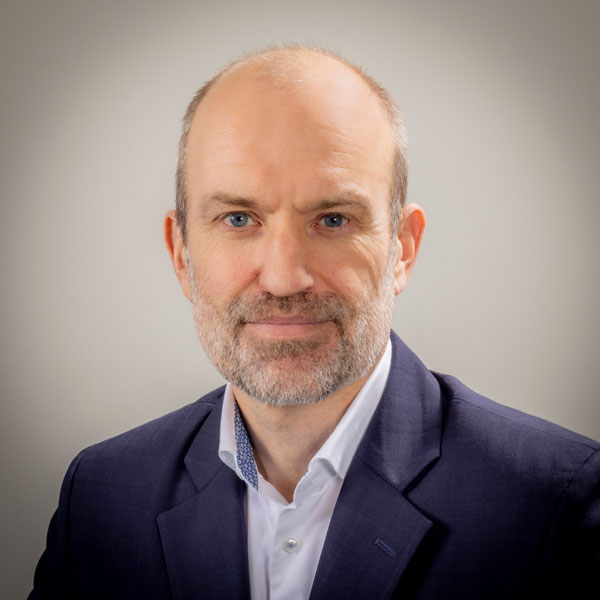
In this episode of Offshore Wind Leaders, Johan Sandberg, CEO of SeaTwirl, discusses the evolution of floating offshore wind, the challenges facing the industry, and the role of innovation in accelerating deployment. He shares insights from nearly two decades in offshore wind and explains how SeaTwirl’s vertical-axis turbine technology aims to reduce costs and unlock new opportunities for smaller-scale offshore energy projects. The conversation also explores leadership, financing, energy security, and the future of floating wind in an increasingly AI-driven world.
Ivar Slengesol (00:00):
Welcome to PowerPod Presents Offshore Wind Leaders, a TGS 4C podcast series, where we meet the people shaping the future of offshore wind. From developers and investors to technology providers, policymakers and industry innovators, we speak with the leaders making the decisions that will define this rapidly evolving industry.
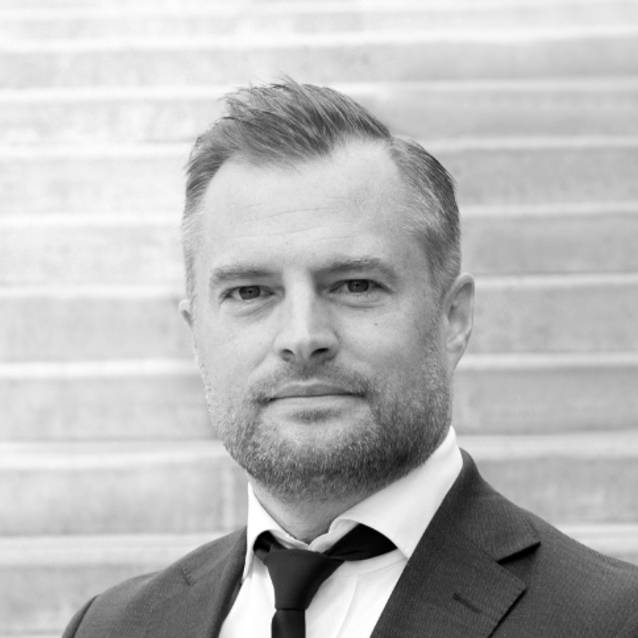
Offshore wind is at a pivotal moment, costs, supply chain, technology, regulation and new markets are reshaping the sector, creating both major challenges and extraordinary opportunities. In each episode we go beyond the headlines to explore the strategies, decisions and experiences behind the industry's biggest developments. What does it take to succeed in offshore wind? What will the industry look like in 5, 10 or 20 years? And who will lead the next phase of its growth? I'm your host Ivar Slengesol, managing director of Market Intelligence Provider TGS 4C and this is Offshore Wind Leaders.
And a warm welcome to our guest today, Johan Sandberg, the CEO of SeaTwirl. Welcome to the podcast Johan.
Johan Sandberg (01:12):
Thank you Ivar.
Ivar Slengesol (01:15):
Now, before we go into your career, your leadership experience, we want to talk about SeaTwirl of course and also about the offshore wind and particular floating offshore wind. Could you give us a short introduction, a 60 second introduction of yourself both professionally and personally?
Johan Sandberg (01:37):
Yes, of course. So, my journey in the offshore wind industry began back in 2008. I had just moved to Norway and joined the company DNV. I grew up in Sweden, and I studied here and then I moved to London for about four years and spent some time there working in the banking industry with risk management. So, when I came to Norway and joined DNV, I ended up in the due diligence department, so basically business risk management. And almost immediately I came into the offshore wind industry through due diligence of the installation vessels. So that was obviously the bottom fixed industry and in 2009 Norway built the Hywind Demo project, Statoil Hydro at the time, and that was I was introduced into that project and ever since then I've basically worked in the offshore wind space and particularly the floating offshore wind industry. So, I was 12 years in DNV, I was then almost four years in Aker and Aker Offshore Wind, and since 2023 I'm now the CEO of the Swedish company SeaTwirl, developing a rather unusual technology for floating offshore wind.
Ivar Slengesol (02:48):
Great. And on a personal basis?
Johan Sandberg (02:52):
Yeah, no, so I'm a father of three, married, and we have actually recently moved back to Sweden after 18 years in Norway. So, I've taken my family out of school and my wife has just started working here in Sweden now and we are settling in here since about five, six months now and it actually feels great.
Ivar Slengesol (03:07):
Good to hear. Back to Sweden. Great, Johan. You spent much of your career working in floating wind like you said, going way back to 2008 before it became a major industry, major topic like it is today. What first convinced you that this was where you wanted to spend your career?
Johan Sandberg (03:28):
Well, I think it was a combination of my personal values has always been a part of it because I'm truly concerned about climate change and I think that is a megatrend that transforms into a business opportunity. And we saw that business opportunity, if you want to call it the green wave or whatever, it just grew for a number of years, and it probably wasn't until the pandemic hit that we actually started to hit some real challenges with that trend. But for all those years since say 2008 until 2020 or so, that green wave, that was a big part of it. So, I saw both my own sort of conviction and also the great business opportunities. And since offshore wind was a new industry, it felt like it was the right place to place your bets on, and particularly floating wind, which was even more immature than the bottom fixed industry.
Ivar Slengesol (04:20):
So, since 2008, you've basically moved through the value chain. You started out in risk analysis, you've been touching on engineering, standards, technology, and ultimately business leadership. So, looking back, what are the most important lessons from those different worlds that you bring to the CEO role today?
Johan Sandberg (04:44):
Yeah, well, it's probably the complexity of all these different variables. So obviously the technology is a part of it, but you have a big market uncertainty that is difficult to maneuver in. I think interest rate is a big part of it, the power price is a big part of it, and all of that is obviously very influenced by politics and policy and public perception. And I think we see today how different countries have very, very different support for offshore wind. And I think that will in the years ahead it will become much clearer which countries actually see that support transition into actual projects and which countries will not. But I mean, it's very valuable to have spent time in different parts of the value chain. So, the supply chain is an important one. The capital market is also a very important one.
Ivar Slengesol (05:36): And you were involved in floating wind when it was a very small community, this is 18 years ago now when you started, and it was a highly uncertain technology. You mentioned the first Hywind project, the first Hywind demo turbine back in 2009. What did the industry look like then? And what did the people working on it understand that others perhaps didn't, and how has that evolved?
Johan Sandberg (06:58):
The market was so focused on the bottom fixed part of it that it was only a small part of us who focused on floating. But at least to me, it was so exciting to just see the potential opportunity in that market. If you just look at how big part of the seabed that is in deep water, it's a very big part of it. And some countries like Norway and Japan and others almost only have deep waters. And for me, it also coincided with the tsunami in Japan that triggered the Fukushima accident and I actually wrote my master thesis when I took my MBA about floating offshore wind in Japan, if it could replace the nuclear power in Japan. So, there were many things that really appealed to me in the floating wind space.
Ivar Slengesol (06:54):
And how have you, when you look back now, how do you see the progress of floating wind put yourself back in your own shoes in 2008 and maybe in 2014, 2020, what has met your expectations and what hasn't met your expectations?
Johan Sandberg (07:14):
I mean, you and I were there when we had this bright future back in 2008 and 2010 and so on. And we made these forecasts saying that by 2020 we're going to have gigawatts of floating wind power installed. We truly believed in that for quite many years, but it was just very difficult to foresee the challenges that sort of came about. And I think part of it has been that the turbines have just kept growing. And at the end of the day, what we tried to do was to put a bottom fixed designed turbine onto a floater. And because the bottom fixed industry evolved and developed so fast, the turbines just kept growing and growing and it was sort of a moving target. It was hard for the floating wind space to sort of catch up with that progress of bottom fixed wind.
And we never really saw any OEM, any turbine OEM, take the opportunity to just develop a floating specific turbine design. So, we had to work with the bottom fixed turbines, but I think that has been a part of the challenge. And of course, we hope that we were going to have several gigawatts installed by now and we don't. So, it's sad in a way, but at the end of the day, you know, we have seen the turbines that have been installed perform really well. So, I think that is still a great sign that they have actually performed. So that's great.
Ivar Slengesol (08:42 ):
So, I want to towards the end of today's episode drill down a little bit further into the future of floating wind and how you see it. But before we get there, I'd like to talk a little bit more about your own experience. Because there can sometimes be a tension between innovation and bankability. Entrepreneurs want to move fast, while investors, engineers, and certifiers like yourself back in the day at DNV want proof. So, having worked on both sides, how do you strike that balance?
Johan Sandberg (09:16):
It's very difficult to create standards and at the same time not sort of hinder innovation. So, what we try to do in DNV and what they still obviously try to do is to have different levels of standards. So, you have the guidelines and recommended practices and the offshore standards and so on, and you have verification versus certification. So, there is a lot of flexibility there to keep the doors open to new innovation, which is great. But at the end of the day, I think it's about access to capital. Because if you need to, if you're going to qualify new technology, you need to have that capacity, you need to have the capital to actually build it and install it and verify it. Insurability and so forth are just so very important.
Ivar Slengesol (10:25):
Would you say access to capital is top of your list of hurdles that need to be overcome for floating wind to take the next step?
Johan Sandberg (10:37):
Yeah, I would actually say so. I think if you have access to capital, you can do what Elon Musk is doing. You know, he has built his SpaceX technology because he has access to all this capital and you know, he crashes and burns and learns, and he doesn't let mistakes stop him. He's almost intentionally pushing technology to the limit to learn fast. And that's not something we can do or at least have been able to do in the offshore wind space. We have been very risk averse and that's also why it takes so long time. So if you have that vision and you really want to reach somewhere within a certain point in time, then access to capital is absolutely crucial.
Ivar Slengesol (11:22):
So, I want to spend a few minutes on SeaTwirl, obviously, which you joined back in 2023. When you joined SeaTwirl, you had spent, like you said, 11 or 12 years at DNV and then four years at Aker developing projects. So, what was the biggest culture or mindset shift for you in moving from large organizations like that to leading a smaller technology focused company like SeaTwirl?
Johan Sandberg (11:53):
It was actually a very specific moment. I recall it very well. It was at a conference in Aberdeen in October 2022. I had been with Aker for quite a few years, and we had just sort of seen this new time when after the invasion of Ukraine, we saw the big interest rates, we saw the huge price increases with commodities like steel and so forth. We still saw bottlenecks from the pandemic and there were just huge dark clouds on the horizon of offshore wind, especially for floating offshore wind. And I was at that conference and there were basically two things. So first, it just felt like the whole industry had matured so much that it was run by lawyers. And I felt almost like I didn't really fit in anymore because now it had grown up and it was so mature that I wasn't really that interested in the discussions that were going on because they were so detailed on actual execution and so on.
So, I thought about that, but at the same time we saw these huge dark clouds on the horizon and I spoke to someone who I trust really well, who had just come out of a round table and she said basically that we don't see any scenario within the next 5 to 10 years where this industry will actually take off. Under current circumstances, it's just so hard to see the route forward for us right now. And that's kind of where I made up my mind because I'd already been in dialogue with SeaTwirl for a while and I'd always been preaching that we need to dare to think out of the box. And I thought that if I've said that for so many years, I actually need to live up to it. And I thought I'll do this, I'll try this. So that's how I ended up here.
Ivar Slengesol (13:45):
So talk a little bit about SeaTwirl for those who may not know the company and the concept.
Johan Sandberg (13:54):
Sure. So SeaTwirl is developing a floating wind turbine technology, and it's based on the vertical axis turbine where the turbine tower is just extending through the generator, and it becomes a rotating spar foundation. So, the whole point of having an integrated turbine or rotor with the spar is because you don't need to carry the weight of the rotor on the bearing. Because that is what has hindered vertical axis turbines from developing into larger turbines. It has been tried onshore for many, many years and we all know why it doesn't work onshore.
So that's why we also say very clearly, we don't believe in it in shallow waters or in bottom fixed or onshore, but we believe in it in floating because that's where you can take the advantages with the vertical axis turbine. And the advantage being that the generator is not located on the top of the tower, but on the bottom of the tower, so very close to the surface, and that's where we think that a lower point of gravity and also access to the generator house will reduce costs for floating offshore wind. That's a very, very short summary, but obviously there is much more information on the website and so forth.
Ivar Slengesol (15:08):
So like you said, SeaTwirl is potentially a disruptive concept. It's challenging some very deeply established assumptions about what an offshore wind turbine should look like. Well, you touched on it already but expand a little bit on what you believe the industry may be underestimating about vertical axis technology.
Johan Sandberg (15:30):
Well, I think the fundamental concept is about reducing cost both in the CapEx phase and in the OpEx phase. So, because we need a spar, it obviously raises the question, well, how are you going to install on a spar foundation? You need deep harbors. And we all have seen that with the Hywind concept and so forth. So we have also tried to develop an installation concept that works with a spar also in shallow harbors and yards. But at the end of the day, the vertical axis turbine has been proven in smaller scales, but it hasn't been proven in very large scale. So, the question for us is not so much if it works in small scale, but does it scale up to the big, the very big scale where we see the horizontal axis turbines today?
And I'm not claiming that we are competing with the Vestas and Siemens of this world in offshore wind because it's such a long, long road ahead of us to get there. But we also think that since there aren't really many other suppliers of offshore wind turbines, there is a space there for much smaller turbines. So we are now focusing on the turbine segment up to maybe 6 megawatt in size, 6 to 8 megawatt in size, where we think that there is great opportunity and where we think our technology will scale very well.
Ivar Slengesol (16:55):
Yeah, and talk about some of those end user segments then where a 6 to 8 megawatt turbine would be relevant or even preferable to 13, 14, 15 or even 20 where we're going now for conventional turbines.
Johan Sandberg (17:18):
Well, I would say it's a rather binary situation today. Either you have a very big project, and you have access to the very big yards and the very big cranes and the big turbines and then you can build and you probably need the scale of almost a gigawatt size projects in order to pull it off. But we think that there is opportunity to build much smaller projects too, and it can be even as small as an aquaculture, you know, a fish farm, who just needs a few hundred kilowatts. And that's why we have a small product portfolio now where the smallest turbine is just 200 kilowatts.
And electrification of oil and gas, electrification of smaller islands or just end of grid communities where you cannot see a grid upgrade coming for the next decade or so, they are desperate for new power. And in those locations, it's also often very difficult to build onshore wind. So many of them have very few options. And what we try to compete against now is just the diesel cost of running diesel generators. Right. Diesel is very expensive, so we think we have a good business case even without huge subsidies.
Ivar Slengesol (18:25):
So SeaTwirl as a company has been around for quite a few years and many years before you came on board as well about three years ago. So, talk a little bit about what has been done in terms of testing the technology and what's ahead of you now.
Johan Sandberg (18:43)
Sure. Yeah, so I think the company was formed in 2012, but obviously it was a very small startup back then. But in 2015, they managed to install the first proof of concept turbine. It was installed here in Sweden on the west coast of Sweden in Lysekil. It was a 30-kilowatt unit, and it stood there for more than 10 years. So, we didn't decommission that turbine until November last year after 10 years in operation. So obviously that turbine has been through a lot of storms and all our models and simulation tools and so forth have been developed from it and calibrated to it. So that turbine has been an important part of that development journey. And of course, alongside the tank tests and so on as well.
So, what we're trying to do now is to just commercialize the technology and create products out of it. But to take it up to the full scale, you obviously need to go multi megawatts in size. So, about a year and a half ago, we applied for the Horizon Europe program called Innovative Floating Wind Turbine Concepts. And I think there were 13 applicants and we were one of two successful ones. So that project is now in full blown and steaming ahead. It's called VertiGO. It's 11 partners. And some of them are quite well known, EDP for instance is a part of the consortium and many others too.
Ivar Slengesol (20:31):
So this is the next step in terms of getting proof for the technology and moving along the technology readiness scale.
Johan Sandberg (20:44): Yes.
Ivar Slengesol (20:45):
And which that's the single biggest milestone obviously that you need to achieve. Is this where once you've done that and given that it's successful, is this where you can say credibly that this is going from saying this is an interesting technology to a credible commercial solution or how do you see the future?
Johan Sandberg (21:09):
Well, if it performs according to how we think it will perform and hope it will perform, yes, then I think we will have a sort of commercial product there. Obviously not for the big 1,000-megawatt projects because a 2-megawatt turbine is way too small for that, but like I said, there are big opportunities also in the small project market. And we often hear this analogy to the airline industry. It's like today you only have Jumbo Jets and Airbus A380s available in the offshore wind market, but many airports cannot accommodate those big planes. And there is a need for smaller planes as well, and I think it's the same for wind turbines that there are small customers out there who need much smaller turbines. And the supply chain, as you know, it's a huge bottleneck for the big turbines. Very few yards can build them and so on.
Ivar Slengesol (22:00):
So I'd like to spend the next few minutes on your challenge as CEO and the leadership challenge in the context of SeaTwirl. You're commercializing something that's genuinely new with SeaTwirl. And there is of course a big difference between developing innovative technology and building a company capable of commercializing it. So so far, what's been the most difficult part and most challenging part for you of that transition as CEO?
Johan Sandberg (22:40):
When I came into the company and took over, it was a very R&D focused team. And the big challenge for me was to create a different mindset, to make it much more commercial and to understand that it is a company that we have to create here. It's not some sort of theoretical turbine design, it's a real company. And it was to change that culture in the team that was the biggest difficulty. Of course, you need to change the management team fundamentally and many of the rest of the team as well, so the entire composition of the company had to change. And you just don't do that overnight. It's a rather long journey; it takes quite a few years. But at the same time, you also want to keep the core of the team as well and you need to keep the identity of the company. So, we have obviously kept very important people in the team to make sure we also keep the learnings from everything. So, with the Horizon project, we could grow, and that was fantastic because then we could both keep the most important part of the team while also growing and changing the composition of the group.
Ivar Slengesol (23:53):
So what are some of the skill sets and experiences that you have recruited for in recent years?
Johan Sandberg (24:00):
It's the commercial skill sets really. So, it's both about business development, but also how you sort of apply the technology into certain industries, so we wanted to see where we could find synergies between what we try to do and the customers. So, we have not just a rotor or a turbine, but also some associated systems as well, and how you package it into a value proposition that can be really sold and that is easy to understand for the customer so that the risk doesn't feel as difficult to take.
Ivar Slengesol (24:40):
Yeah, so how do you lead? How do you think about this going into it of course, and I'm sure you also learned many lessons through this transition for the past three years. So how do you lead an organization where you have to continue to be highly innovative, like you said it was sort of an R&D organization, but you also have to be commercial and extremely disciplined? So, you need people to think outside the box, but you also need to freeze designs, you need to manage risks, and you need to deliver on the project. So, talk a little bit about your own journey over the past three years.
Johan Sandberg (25:12):
Yeah, well, I think one of the things I've learned the most is how you really need to work with the supply chain, how you can, it doesn't really matter if you design something that isn't able to be manufactured. You need to work with the suppliers to see that you can build it and you can understand roughly how much it's going to cost to build it. Because otherwise you just end up with a theoretical design that isn't actually possible to build. And that was one of the key things we had to do, and that's also what we had to recruit and bring into the company, people who understood more of that.
But I think it's also about how you fold the whole thing together, so it doesn't drift apart into silos where you have sort of a theoretical part and then you have a supply chain part and a project part but really keeping it very integrated and tight. And that's also one of the most important things that I had to do was to take my family with me from Norway and move to Sweden to be in the office every single day to keep it tight. And we also said very clearly to the management team, everybody who's going to be in the management team needs to live here, need to be in the office every single day and work together as a tight team.
Ivar Slengesol (26:28):
Right. Very important, that physical dimension as well.
Johan Sandberg (26:35):
Yeah. But just to continue a little bit, I also saw great opportunity in that because right here in Gothenburg, we are very much in an automotive cluster. Gothenburg is the home of Volvo, and the automotive industry is very strong here. So, we see also how that industry can really influence us and how we think about designing a completely new machine. Because that's really what it's all about, and the automotive industry today is extremely influenced by what's happening in China and how they manufacture cars, and how AI has taken over the production of cars and how it's now basically an unmanned operation to build cars. It's factories with robots essentially. So, we sit in an environment now where we can learn so much from that automotive industry. And I think the combination of what Norway knows, which is the offshore industry, structure, mooring, safety, marine operations and so on, and what we do here in Sweden or in Gothenburg, which is more machine, creating machines, advanced machines, that is a very strong combination. So that was also one of the reasons I wanted to move. I saw great synergies between Sweden and Norway.
Ivar Slengesol (27:28):
Exactly. So, you know both, you know the offshore industry from Norway and you're there in Gothenburg with the auto industry. So, beyond recruitment, I guess, because you can recruit from both of those domains, how in practical terms do you get to draw out those lessons and benefit from those clusters?
Johan Sandberg (28:15):
Well, I really try to leverage my own personal network as well. So, I've recruited, maybe not as a permanent employee all the time, but both into my board and into an advisory board and into strategic advisory services and so forth, I've used almost everybody I know from the industry. So, I've added at least 10 very senior people from offshore wind getting involved into SeaTwirl. Some of them are still on the board or employed part time at least by us. So really try to get all their perspective into the strategy so that we always know what are the real big challenges that we need to address here and now. So, I've had market people, technical people, policy, finance, very, very skilled people coming in and joining me.
Ivar Slengesol (29:10):
If you can, take us through a little bit how those type of industry profiles and the board has been helping you as CEO and helping develop the organization over the past two or three years.
Johan Sandberg (29:25):
Well, the first person I called when I had this offer was a true friend who I trust almost more than anyone, it was Andrew Garrad. I've known him for many years, and he recommended me a person who had worked a lot with vertical axis turbines, and his name is Mike Anderson, and he's still on the board. But we then also formed an advisory board as well. And Andrew Garrad came on board that board.
So, he was there for quite a few years along with Matt Smith, who's a market person with offshore wind, and Finn Gunnar Nielsen, who is, I would say, almost the father of floating offshore wind. He was the man behind the Hywind turbine, so also with the spar design turbine. So, we had great use of them for the first few years and also in this early transition of the company into something different. And since then, I've worked with Bruno Guicheux, with Leif Delp, and with other really good names from around the industry. Jerome Guillet is still on the board from Green Giraffe and now from Snow. So, we've had strong individuals supporting us from different domains in the industry.
Ivar Slengesol (30:57):
And the SeaTwirl stock is listed, so how does that affect your job in a technology that's still relatively early phase?
Johan Sandberg (31:12):
Well, it's a whole new dimension for me anyway. I mean, in DNV there wasn't any stock or share price to consider at all. In Aker Offshore Wind there was, but it was very early days, and I wasn't particularly involved in the communication from the company as such either. But now of course, I'm extremely involved in that, we have to take that into consideration in everything we do. And it's a great challenge, but it's also highly interesting and you learn a lot from it. So of course, when I came in in 2023, we had thousands of shareholders and they had all invested in a rather different story than what I'm trying to create now because it was still early days, I can say. So, it's all about managing the expectations of all these shareholders while being realistic about the risks and the opportunities.
So now that we have this big EU funded project that has sort of its own life in a way, it's our technology, but it's also a big consortium with its own communication team and so on, but of course we try to communicate as much and as honestly as we possibly can. So, I constantly feel really bad about not communicating enough, but at the same time we have some big presentations a couple of times per year where I really try to give an update, and if there is something specific, we need to do press releases and so on. But it's important about striking the right balance between the risk and the opportunities in that communication.
Ivar Slengesol (32:50):
So, I'd like to spend the last part of this episode going back to what we started speaking about, this floating offshore wind as an industry. And as we talked about, the industry has had enormous ambition but also cost inflation and supply chain constraints and difficult finance conditions in recent years. So, what do you think the industry has learned from those past few years?
Johan Sandberg (33:25):
Well, I think like I said before, we should definitely have learned that the technology works, that the projects we have put into the water, they perform. So that's a very, very important takeaway. We also see that there have been some cost overruns and some delays and so on, but they should be manageable and they should be possible to fix. But I think that since 2022 when we saw the big inflation increase and all of that, it has been just much more challenging and the fact that it's so capital intensive has made us more vulnerable to that situation. But the fundamental megatrend of climate being one thing, but more importantly energy security, is just going to be there forever, or at least until we have managed to sort it out. And right now, with the Strait of Hormuz crisis and oil price and gas imports and so forth, Europe just needs to find its own energy source and there are not really any big, good alternatives compared to offshore wind.
I mean, nuclear is a huge discussion both here in Sweden and in Norway, but it's just further into the future. And when I end up in discussions like that, I sometimes say that even if nuclear is really cheap, just the time it takes to deploy it and to build it, what is that time worth? And like all the industry that we have here on the west coast of Sweden, they're just so dependent on more new power coming in, and losing 10 years of new additional power is so valuable. And it's a huge loss if we're not able to deploy much more power soon. We have an election coming up here now in just two weeks in Norway, you had an election a year ago. So, I think we'll see some changes in policy in Sweden if we have a change of government, and right now it looks like we might have a change of government, so Sweden could be an interesting market again.
Ivar Slengesol (35:35):
Yeah, you think the pendulum could swing back in Sweden. It's been a few challenging years for the Swedish offshore wind market in terms of projects being developed.
Johan Sandberg (35:46):
Yeah, so Sweden had the situation before the last election in 2022, there was strong support for offshore wind, but the new government, they basically won the election on the nuclear question, and they had to deliver on it, so they essentially stopped all offshore wind plans and they went all in on nuclear. But it's such long timelines for nuclear power as well that you need to have a consensus between both sides of the political spectrum in order to realize nuclear power. So, either you're going to have both, I think, both nuclear and offshore wind, or neither. And that's where I think we'll have some kind of agreement within maybe a year or so to see something happening here.
Ivar Slengesol (36:32):
Let me hope so, and that the Swedish market gets back on track. Back to floating wind technology with your background, do you think the industry needs more standardization, or do we still need more technological diversity before the winners emerge, or is it a matter of both?
Johan Sandberg (36:58):
I'm not sure the industry needs more sort of fine tuning of the existing designs. If we talk about conventional technology, the horizontal axis wind turbines, I don't think the foundation designs need to be fine-tuned much more. They need to be installed and proven and verified, probably in smaller scale first, and then deployed in larger projects, maybe a few hundred megawatts, maybe like Utsira Nord, 4 or 500 megawatt project. And then once they are proven and certified, they can be deployed at scale, I'm sure. So, they can be steel or they can be concrete, they can be TLPs or semi-subs or even spar. But I don't think it's a design question anymore, now it's much more about an execution question and financing. Who's willing to take that risk to take the projects all the way through? That's really what we need to see and that's why I really hope Utsira Nord is going to happen, I hope Green Volt is going to happen and Cerulean and all the other sorts of approved projects. Once they are there, it could unleash the whole potential of the industry.
Ivar Slengesol (38:11):
Any thoughts of what more can be done also by authorities to enable that access to financing that we spoke about? Obviously, you have support yourself from the EU through the Horizon program, so what could and should be done to sort of push it ahead?
Johan Sandberg (38:32):
We are obviously in an earlier phase than the horizontal axis turbine. The turbine itself has been proven, it's been proven on floaters, it might not have been proven yet on the very big turbines and floaters, the 15-to-20-megawatt scale, but that's coming soon as well. So, I think the fundamental thing we need to work on is the public perception of what we want to achieve this. The public perception in the different markets and countries. So, for instance, in the UK, we've had a very strong sort of stamina to keep the offshore wind industry going. And I think it comes from the people. They are concerned about climate change, and they are concerned about the UK's situation on energy independence and so on, and it has driven that market forward in a very, or pretty steady pace. Denmark is the same, and I think to a large extent also in Germany.
In Norway, you have hit some kind of a roadblock and it's not really, I don't think it feels like you have that very strong public support anymore, whereas in Sweden it's a bit more uncertain. I think there is a lot more public support here, and we'll see after this election if that sort of comes back and things start to move again here. But if you have that underlying force against you or with you, that is in the end what's going to determine if the projects get installed or not. So, it will sort out financing in the longer term, it will sort out the permitting, there will be this sort of willingness in the country or in the market or in the people to actually make it happen.
Ivar Slengesol (40:12):
So what's the responsibility of industry? What can industry do more of to sort of encourage and promote public opinion that is so important according in your mind?
Johan Sandberg (40:21):
It's a difficult question, but to demonstrate that it works, seeing a successful project is inspiring to anyone, I think. I'm extremely inspired by what Equinor has done with Hywind. And a lot of people see the opposite, they see a sort of an expensive industry or they see destruction of nature or things like that. But I think it's important to highlight the success stories here. And one of the things we need to remember is that the wind industry is one industry, and I do not believe that you can have an argument saying that we don't want onshore turbines, but we would like to see offshore turbines. I think we need to work with it as one industry, so you cannot argue against onshore wind and for offshore wind. So, in Norway, for instance, we need to work with the onshore wind industry as well, because only when that succeeds and they can start building out their projects, you will also see the offshore wind industry follow, I think. So, when I talked about my own technology before, that was a technical question. We don't think vertical axis turbines work very well onshore for technical reasons, whereas we believe they will work floating for technical reasons. But in public perception, it's a whole different thing.
Ivar Slengesol (41:40):
So, let me look ahead and let's look towards 2030. What do you think will surprise people most about offshore wind in that perspective, now talking a 3, 4, 5-year perspective?
Johan Sandberg (41:55):
What will surprise people the most? I'm not sure. What will surprise me the most is probably how AI has, what impact it has on the industry. So I think either AI will have had some kind of engineering or design impact that has changed something, maybe it has reduced the cost of offshore wind or floating wind substantially and it has made it profitable, or it has found something else that makes offshore wind obsolete, you know, or it has just created this huge energy demand that motivates also expensive energy sources that we can build them for that reason. But I think AI is going to have a huge impact on all industries even within that time frame, even within 3 to 4 years we'll see major impacts. It's just very difficult to see how.
Ivar Slengesol (42:49):
Exactly, and that's a topic in and of itself that I would have loved to go deeper into, but I'd like to ask you about SeaTwirl in this context as well, of AI and the opportunities and potential threats as well. In terms of SeaTwirl, what would need to happen by 2030 for you to say we succeeded?
Johan Sandberg (43:14):
We would like to be a profitable company. So as soon as we have turned into a profitable company where we can basically fund our own development of bigger and larger turbines, then I would say we have succeeded. Because then we can stand on our own feet and drive that development ourselves. That's probably the one main thing I would say. And of course, we would like to have seen a few turbines in the water. We've proven them in some different sizes. The VertiGO project obviously installed and successfully operated for a year or two by 2030. So yeah, that's probably it for us.
Ivar Slengesol (43:47):
And finally, if a young engineer or entrepreneur listening to this podcast said, I want to help shape the future of offshore wind, what advice would you give them and where should they be looking for the biggest opportunities?
Johan Sandberg (44:11):
Very difficult to say, since we are in this strange time where we think AI is going to change and shape the future so much also in the next 4 or 5 years. I think this industry is extremely exciting, extremely promising for the reasons we've talked about, the megatrends of climate, the megatrend of energy security, energy independence. And I think there are so many parts of the value chain that you can work in to make it happen. I would advise doing something similar to what I've done, to try different parts of the value chain. Maybe try out the policy part for a while, maybe try the technology developer, maybe try project developer, maybe financing, because it's really only when you try out to actually be in those roles yourself, that's where you truly start to understand the industry from all these different perspectives.
Ivar Slengesol (45:10):
Very good advice, and thank you, Johan, for joining the Offshore Wind Leaders podcast. Johan Sandberg, a true pioneer and innovator in offshore wind for almost 20 years, and now pushing the boundaries with the vertical axis concept SeaTwirl. So, thanks again for joining the podcast and have a good rest of the day, Johan.
Johan Sandberg (45:38):
Thank you, Ivar. Very nice to be here.
Ivar Slengesol (45:45):
And thank you for joining us for Offshore Wind Leaders, a new podcast series from PowerPod by TGS 4C. We hope you enjoyed this conversation and the insights shared by today's guest. Please make sure to subscribe to PowerPod and join us for future episodes where we continue to speak with leaders, innovators, and policymakers shaping the future of Offshore Wind. Until next time, thanks for listening and see you on the next episode.
Also available on:


The Host