

First Published: Starlink Case Studies (August 2026)
Situation
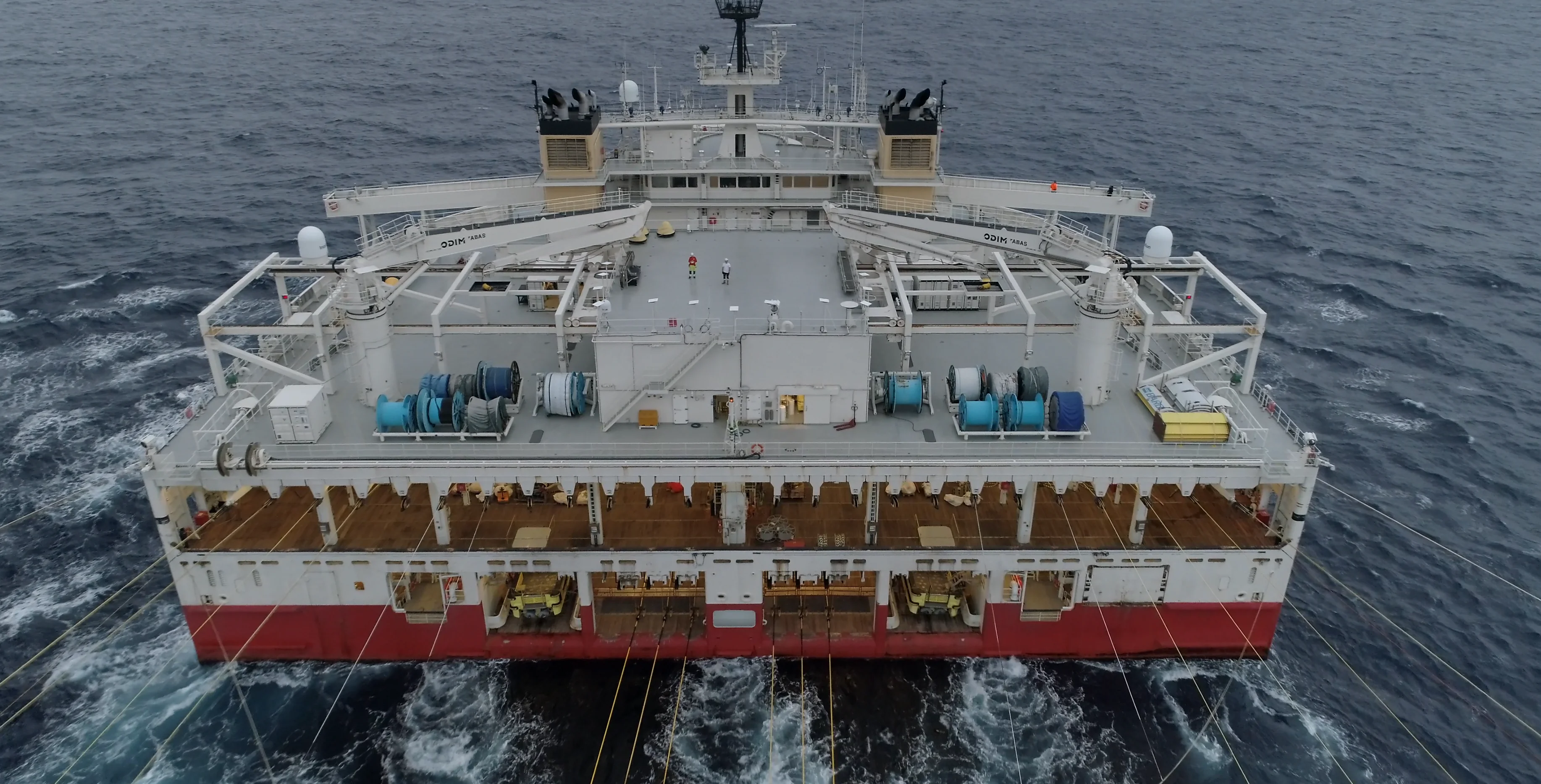
TGS ASA is a global provider of energy data and intelligence company operating at the intersection of geoscience, technology, and data. The company provides advanced seismic data, imaging, acquisition, and digital solutions that support exploration, development, and the energy evolution. To overcome connectivity limitations in remote offshore operations and support modern real-time data-intensive workflows, TGS has transitioned its seismic vessels to Starlink through the company's connectivity provider, Speedcast, who supports TGS' global fleet.
Challenge
Before adopting Starlink internet and bringing on Speedcast as the company's connectivity provider, TGS relied on traditional maritime satellite communication systems. These systems came with limited bandwidth and high latency that restricted the volume and speed of data that could be transferred from offshore locations.
The limited connectivity made it difficult to transfer large seismic datasets in real time, run real-time collaboration tools, cloud-based processing, and remote monitoring. Large seismic datasets had to be captured on physical media and transported off the vessel, creating heavy logistics burdens, multiple handoffs, and delays in quality control, processing, and decision making.
This connectivity limitation also affected operational efficiency and the ability to leverage onshore expertise in real time, making it harder for TGS to accelerate digital transformation and deliver faster insights to customers.
Impact
TGS collaborated with Speedcast, an authorized Starlink integrator and global communications and IT services provider, to deploy a fully managed, end-to-end Starlink solution. Speedcast provided expertise in network design, installation, and integration of Starlink's Dedicated Service, designed to deliver superior performance for high-bandwidth use cases, including the highest tier of prioritization and even lower latency, jitter and packet loss.
Starlink has removed previous connectivity restrictions and enabled TGS to significantly increase data transfer capabilities across its fleet. Seismic data transfer has increased dramatically, from 200GB/day in 2023 to 10TB/day today, allowing the company to fully utilize advanced digital systems while delivering faster insights to customers.
Vessels have seen data transfer capabilities increase from 200GB to 10TB per day in remote areas including 138 miles above the Arctic Circle, unlocking full use of cloud platforms, video conferencing, and other bandwidth-intensive applications that were previously restricted.
The removal of bandwidth limits has supported real-time transfer of large seismic datasets directly to the cloud, providing much greater visibility into ongoing surveys and accelerating downstream processing, insight, and decision making.
Starlink has enabled seamless real-time collaboration between offshore crews and onshore experts, enabling remote quality control, processing, and interpretation while reducing the need for specialists to be physically present offshore. Through Starlink, TGS is positioned to continue leading the energy sector's digital transformation with faster insights, greater efficiency, and unmatched operational resilience.