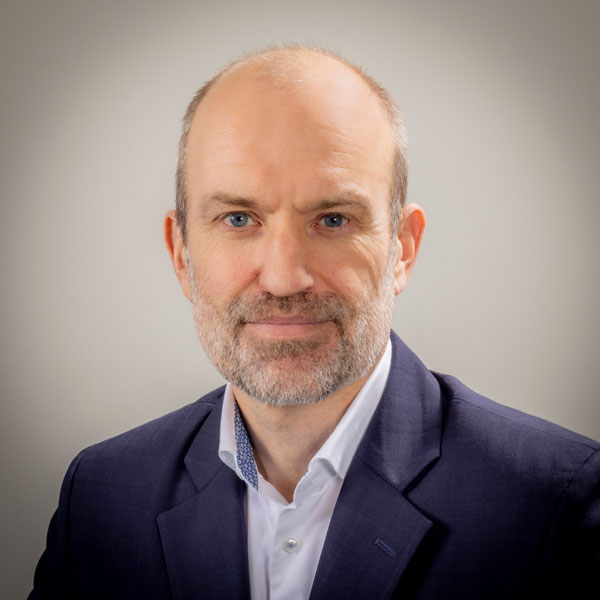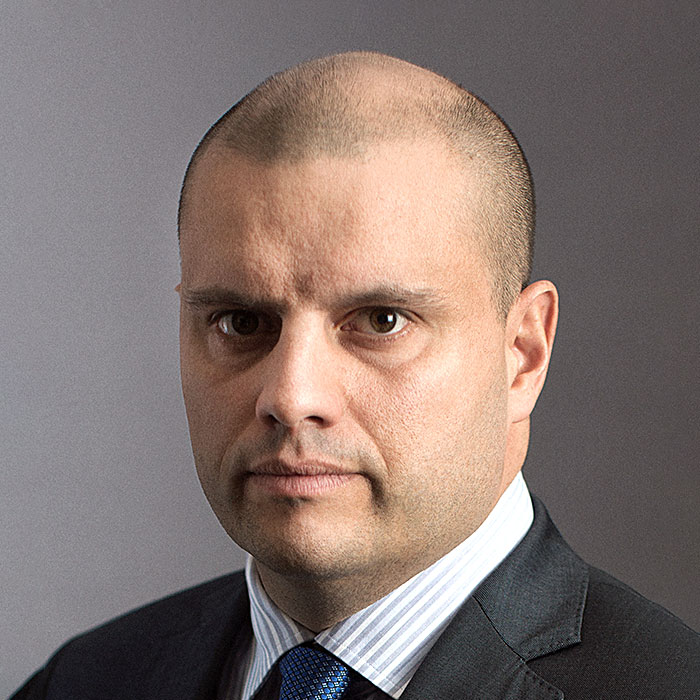


In this episode of Offshore Wind Leaders, host Ivar Slengesol speaks with Jérôme Guillet, one of the pioneers of offshore wind project finance and Managing Director of Snow. Drawing on more than 30 years of experience in energy finance, Guillet explains how early offshore wind projects were funded, why cost of capital remains the industry's most important driver, and how financing structures have shaped market development over the past two decades.
The conversation also explores the changing role of utilities, the withdrawal of many oil and gas companies from offshore wind, lessons from European auction design, and the outlook for emerging offshore wind markets. Guillet concludes with his perspective on the broader energy transition, emphasizing the growing importance of decentralized energy solutions and smaller market participants
Ivar Slengesol (00:00):
Welcome to PowerPod presents: Offshore Wind Leaders, a TGS 4C podcast series where we meet the people shaping the future of offshore wind. From developers and investors to technology providers, policymakers and industry innovators, we speak with the leaders making the decisions that will define this rapidly evolving industry. In each episode we go beyond the headlines to explore the strategies, decisions, and experiences behind the industry's biggest developments.
I'm your host, Ivar Slengesol, managing director of market intelligence provider TGS 4C, and this is Offshore Wind Leaders.
And a warm welcome today to our guest, Jérôme Guillet, managing director of Snow, an industry veteran and a thought leader in offshore wind and renewables. Welcome to the podcast, Jérôme.
Jérôme Guillet (00:50):
Thank you, Ivar, thanks for having me, and glad to be there.
Ivar Slengesol (00:55):
So, you have very long experience in renewables and in offshore wind. Please start with an introduction of yourself of about 60 seconds both professionally and personally.
Jérôme Guillet (01:08):
Yeah, happy to do so. Well, I've been in energy finance exactly 30 years. I started my first job in banking 30 years ago financing Russian oil and gas, and that's because I wrote my PhD on the independence of Ukraine, which is a bit topical these days, and I spent a lot of time exploring the gas relationship between Ukraine and Russia. So that's how I got into energy and into finance—oil and gas in the former Soviet Union, then elsewhere in the world, and then I moved to power, all on the banking lending side.
I started financing renewables in 2002 with Dexia, the Franco-Belgian bank, and we were one of the first to do onshore wind. Being a small bank, we said, 'What can we do to stay ahead of the bigger banks that are coming?' So we started looking at offshore wind. We managed to do the very first debt financing for an offshore wind farm in 2006 for the Q7, now Princess Amalia project in the Netherlands. That was 20 years ago, almost to this date—it was in late October that we signed the financing. Then we did the second one, and the third one.
Then my bank went bankrupt and was bailed out, but I was told to do advisory, and that's when I started Green Giraffe, the financial advisory company focused on renewables with a strong presence in offshore wind. We kept on doing many offshore wind deals, as well as onshore, solar, debt financing, and equity financing raising debt. We tended to work a lot with smaller developers rather than the large utilities, and we can talk at some point on how projects are financed differently by the bigger developers and the smaller players. I'll stop there and maybe we can dig into some of these items in the conversation.
Ivar Slengesol (03:23):
Yes, absolutely. And on the personal side, Jérôme?
Jérôme Guillet (03:27):
Yeah, well I'm 55 and based in Paris—I've always been based in Paris. I grew up in Strasbourg, so I grew up in Europe, came to France to study, and then stayed in Paris. I've got three kids, still between Paris and... well, my eldest daughter is at GB Energy, so she joined the industry on the UK side as a developer.
Ivar Slengesol (03:57):
Excellent, great! It continues in the family. So, as you said, you have a very long and varied career in offshore wind and in other renewables as well. What you didn't mention in your introduction is that you're also a thought leader. You have been writing regular articles, opinion pieces, or blogs for many, many years. So, from that point of view as well, you have some clear thoughts on different topics—on market design, the investor base, floating wind, and many other topics.
We'll cover some of those in this conversation as well, but first I want to start out from the beginning, since you were there with the first project financing 20 years ago, like you said. Before we get into the experience, talk a little bit about how developers finance offshore wind projects. From a top level, there are two ways to do it, right? To use basically your own balance sheet, your own money so to speak, into the project, or to use external financing sources like banks. Talk a little bit about that as an introduction for those who may not be too familiar with financing of offshore wind projects.
Jérôme Guillet (05:32):
Yeah, no, I mean you described it. It's either on-balance sheet or using debt, and the important thing about using debt in that case of financing a project is that it's what's called non-recourse debt, which means that you finance the project and not the investor, because otherwise that would go back on the balance sheet of the investor. So, the banks need to be satisfied that the project will actually be built and operated as promised, within budget, with the right timeline, producing as expected, and selling the production as expected. So, it means the banks are taking a lot of risk on the project.
That has been done in a number of sectors, but typically it's done where you have complex projects like oil and gas infrastructure, LNG trains, pipelines, or railways. When it's complex, you typically have a construction guarantee from the sponsors. They're more interested in the banks taking the operating risk or maybe the political risk, but rarely the construction risk. Then you have relatively simpler projects like onshore wind or solar, where it's been possible to take construction risk as well because it's relatively straightforward—you typically have one major contractor, in the case of wind the turbine manufacturer, and the banks are willing to take the risk on that one contractor.
Offshore wind was unusual when it started because it was complex, but you had developers that wanted the banks to take the full construction risk for the very simple reason that they didn't have the money on their balance sheet. They didn't have the balance sheet to get it done, because in the early days of offshore wind, you still had a lot of small developers, the same that did onshore wind, and they tried to raise money from that. So basically, at that time, they came to the banks and told us, 'Well, we understand this is risky, but what do you need to make it work? We'll give you whatever we can that doesn't bankrupt us, basically, or doesn't make the project impossible to be profitable.'
With that kind of flexibility, the banks were able to be a bit creative or conservative, but at least they thought, 'Well, what do we actually need to make this work?' And we did. That's what happened when you say, 'What do we need to make it work?' instead of 'What do we want to avoid?' or how to optimize it. The goal was not to optimize it; it was just to actually succeed in raising the money. With that mindset, the first projects were financed. It did help that it was in 2007 before the crisis, so the times were quite bullish and the banks were probably willing to take a bit more risk at the time, but a lot of the precedents were created, and the logic was fairly straightforward: let me look at the risks and see how we can mitigate them.
There's a risk of delays—well, can we have something where we have additional time and additional budget in case something goes wrong? How much does that budget need to be, what kind of contingencies and guarantees do we need from the contractors, and what are they willing to do? We put all of this together and thought that it should be sufficient to make it work. On the first projects, there were lots of problems, and the structures showed that they could resist such problems. We basically budgeted for a full year delay in construction, a full season so if you can't finish one summer, you need to wait for the next summer kind of thing, and that's actually what happened.
As the structures worked and the project worked within the full budget including contingencies, what the banks remembered was not that there were problems, but that they could be solved. That created the precedents that were reused in future projects. It also created the culture where developers were encouraged to be transparent about their problems, share them, and show how they had solved them. The banking world built this database of problems that had been met and solved, as well as this group of developers that were seen as competent to solve the problems, and these were able to borrow money on better terms the next time around.
So that meant that the industry built over two poles: the poles done by the utilities—the Ørsteds, Vattenfalls, and RWEs of this world—where they do it on balance sheet, they do it their own way, they take construction risk, they manage it internally with their large project teams, and then they potentially refinance or sell down to others (which is a cost of capital play); and you had the projects done with real project finance, with the banks taking construction risk, which meant that the contracts needed to be bank-compatible. That's also why the utilities didn't really use that route, because they don't like banks to tell them how their contracts should be structured or done. The two sides worked side by side, but in recent years, the big utilities didn't like the competition of the smaller players, so they've been lobbying quite hard for the smaller developers to be pushed out of tenders and projects in general. In recent years, you've mostly had utility-owned projects and there's been less project finance.
Ivar Slengesol (11:30):
Right. So, take us through the trends like you started to do here for the last 20 years where you had some of the relatively smaller developers using project financing. Who were the early pioneers on the lending side, and who were the early pioneers on the developers' side, and how has that evolved over time?
Jérôme Guillet (11:55):
Yeah, the early banks are very simple: that's Dexia and Rabobank, together with EKF, which now has changed its name to EIFO (the Danish export credit agency), and EIB (the European Investment Bank) was quite active from the early deals. Then a wider group of banks came in syndication and in arranging new deals. The most active have been the French and the Japanese banks: BNP, SocGen, MUFG, SMBC, and a handful of others. They're still around these days with pretty specialized teams.
On the developers' side, you had Dutch players that haven't really stayed around, like Econcern that got replaced. Parkwind took over some of these projects—that was the Colruyt arm which became Parkwind—and they've become a very successful independent player. The other successful independent players have been WPD, which was sold and has become the Skyborn entity now owned by GIP. You could argue that Northland Power, though they're slightly bigger, are on the project finance side of things; they took over some of the projects by smaller developers and got them financed, building quite a nice portfolio.
Then you have some utilities that try to do project finance, but when you have, to give an example, a French project by EDF in France, how non-recourse is it? Do you really expect EDF to abandon the project? So, there's a bit of expectation—it's not a contractual commitment, but you kind of expect someone like EDF to do more than just their contractual commitments to make sure that a French project gets actually built. So, it is non-recourse contractually, but in terms of the risk assessment, the banks are probably going to give credit to the fact that you have a very committed sponsor, getting sort of hybrid structures in that case.
Ivar Slengesol (14:20):
Right. You mentioned cost of capital, and that being a big factor in deciding how a developer or a consortium of developers would structure their financing or what type of financing they would use. Expand a little bit on that on how particularly the larger utilities and the developers with oil and gas legacy are thinking about potentially using project financing, and in most cases choosing not to use project finance.
Jérôme Guillet (15:00):
To get back to the starting point, offshore wind like most renewables is a very capital-intensive sector. Basically, you spend all the money upfront, and then there's very limited operation and maintenance costs. So, the real cost of electricity is going to be how efficiently you are able to spread that cost over as long a possible period in the future. It's the cost of capital over what period, so you want to maximize the operational period and you want to minimize the cost of capital, the internal rate of return of the investors, or the cost of debt if you have it, or the combination of the two. This is the single biggest driver of the cost of electricity.
In the early projects, you really wanted to get them built, so you had fixed tariffs; as long as you could get built within that price, you were happy, and profitability was not the first priority - getting it done was the first criterion. From 2015 when you started having the auctions, you started needing to be competitive, and that meant having a lower cost of capital.
To be competitive, there are basically two ways to do it. Debt is cheaper than equity, so project finance is cheaper in terms of the cost of capital, but in order to get project finance, you need contracts and contractual commitments that pass on more of the risk to the contractors, which typically translates into more expensive contracts. So there's a tradeoff between the cost of capital and the cost of the contracts that do the work, which means that both options—project finance or utility balance sheet options - can be the most competitive depending on how well you negotiate your contracts and your financing. It's led to two fairly different contractual structures and types of negotiations.
The utilities tend to squeeze their contractors: they keep more of the risk internally and squeeze the contractors, so it's very much a price-driven negotiation. Whereas in project finance deals, they're going to try to say, 'Well, we want guarantees, but we can pay a bit more for that, so let's find the best possible combination that makes the developer, the banks, and the contractors happy.' That's a three-way negotiation, and not just bilateral, so it's not completely zero-sum, and if you do it well, you can find some quite smart solutions.
The utilities have focused on the cost side of the projects, and they've been reasonably successful at that and have been competitive. The oil and gas companies - same thing, they're big companies. They're good at project finance because they do it in their oil and gas projects, so they have relationships with the banks, but they didn't really have the experience of construction, and they have the other problem that their cost of equity is more expensive in general than that of a utility.
So they started from a more difficult point of view. You can see they didn't really want to do renewables - they were kind of pushed by their investors in the 2018–2020 period against their will, so they sort of did it because they were forced and didn't put all their heart into it. It was still a side show for them, and then as soon as they had an excuse to exit the sector—which was basically in 2022 when oil prices went up and their oil business was so profitable that investors said, 'Why do you bother with the green crap?' as it became known—they started to step out.
They stepped out after a few years of being in, bidding for projects in fairly expensive ways and being very aggressive towards contractors, trying to bring prices down, which led to bankruptcy or financial difficulties for a lot of these contractors. So they created a lot of chaos and havoc in the industry, and then obviously the turmoil from 2022 - inflation, increase in interest rates, and changes in prices - made everything more difficult for everybody. But they could just exit and say, 'Well, offshore wind doesn't work.'
One issue worth mentioning is that when utilities talk about offshore wind, the mainstream press doesn't really care that much, but when an oil and gas company says offshore wind sucks, it goes to the front page of the Financial Times, and it gives a bad image to the sector. To be fair, at the same time Ørsted became more visible because they were briefly more valuable than some of the oil companies, so suddenly they had a lot of visibility on the stock market side. That's when the bad news started to come, and that also gave a lot of negative publicity to the sector.
Altogether between 2021/2022 and 2024, you had a lot of repricing of many things: repricing of contracts and supplies due to inflation, repricing of the cost of capital due to the increase in interest rates, and moves on the power price side as well, which could be positive. But you never hear about the good news - the people that have a project and sell their electricity much more expensively, you didn't hear about them; you only heard about those that had to face inflation or increase in costs. But that's a bias that's always the case.
Ivar Slengesol (21:09):
Does the current withdrawal or retrenchment of some oil and gas players represent a problem for offshore wind, or are we simply seeing that the industry is moving towards a more mature ownership model and mix? How have you seen the ownership mix evolving over 20 years? When it comes to the history of oil and gas companies, what is sometimes forgotten is that they were also early movers in offshore wind back in 2007, 2008, 2009, and 2010, and then took a pause so to speak, and then came back in.
Jérôme Guillet (22:00):
Well, not really. They dabbled in it and didn't do much, and the oil and gas contractors tried and all lost money in very spectacular ways. I don't think there's been any oil and gas company that's ever made money in renewables. They came and said, 'It's the North Sea, we know the North Sea very well,' and they were a bit oblivious to the risks. Today, they're mostly gone. Some of them have residual portfolios, but you see that they're shrinking and they're probably trying to sell them. I expect that they're going to exit altogether, because they don't need to do it and it doesn't make sense for them.
The one that had the most consistent strategy was TotalEnergies, and they had a fairly cynical strategy which was to say, 'Well, we want to do merchant, because that's riskier and that's where we get better returns.' That is at least compatible with their cost of capital, but it means that you're going to have expensive projects. So it works in merchant markets when power prices are expensive, but it's a hard position to hold towards your governments to say, 'Well, I'm actually betting on high power prices.' So that's a fine line to take.
The others have just given up and exited, Shell and BP for the most part are out, and the others never really came in. As I said, the contractors have had very mixed experience, except those that have sold very narrow or specialized services. The others have tended to lose money because they underestimate the cost discipline of the sector. The revenue side is very tight. It's not like when you have oil prices increasing where you'll spend money to make the oil happen because you get more money on the revenue side; on the power side, there's no more money on the project than the revenue you're going to get from the tariff or whatever, so it's not the same cost structure.
So, I don't expect the oil and gas companies to be a material force going forward in the future, and as I've said publicly many times, I think that's a good thing, because they've been very disruptive to the sector: coming in and out, creating uncertainty, doing a lot of lobbying for things that were not necessarily good for the industry, pushing for merchant for instance, which doesn't work. Fundamentally they don't have the right capital: they've got expensive equity to take risk because the oil and gas sector is risky, and they can deploy their capital there in very efficient ways, so they should keep on doing that and not come into renewables.
Ivar Slengesol (24:47):
Right. But isn't there a paradox here as well, as oil and gas companies have argued, and others as well, that they should in some instances be well-positioned for offshore wind with offshore engineering expertise, marine operations, and experience with managing large and complex projects? So, from some aspects, shouldn't they be natural offshore wind investors?
Jérôme Guillet (25:15):
Again, no, because being in the North Sea is the main thing that they have in common. They tend to have very large, bespoke structures - you got a big platform, 40,000 tons, very complex, but it's one platform. Offshore wind is serial production and installation of 100 turbines in the water, and serial installation is a completely different work than one large platform that you need to do once.
The oil and gas contractors have never been successful in offshore wind installation. Like I said, they've done some specialized services on installing cables or things that base on existing technology, and some of the suppliers maybe have built jackets and other equipment that goes in the water, but in general, the projects themselves they haven't really managed the risks because they are actually quite different from what they do.
Ivar Slengesol (26:20):
Jérôme, you have been critical of the role of oil and gas companies in offshore wind, and you also have been somewhat critical of governments in some instances at least. You've been critical, for example, of auction structures that prioritize headline value of seabed leases, or force or incentivize developers to bid aggressively. So, what is the fundamental mistake that policymakers have been making in recent years in your mind?
Jérôme Guillet (26:50):
To be clear, I'm not necessarily criticizing the policymakers; often I'm criticizing some of the lobbying that's been done by the industry and industry groups. Policymakers have been trying to do good things in a context where a lot of things have been moving very fast and they get a lot of conflicting advice, so it's not necessarily critical of the regulators themselves.
The key point I've been making is that cost of capital is essential, so you want to have auction structures that favor the lowest cost of capital projects. One way where there's a major difference is whether you have price risk or not. Structures where you have merchant risk or that force projects to rely on PPAs or other forms of price risk mitigation are always going to be more expensive.
I've given the example of the Vattenfall BASF project, where BASF provided a very large PPA off-take and took half of the stake in the project, which they sold and made an immediate profit. If you recalculate the profit they made, it means that Vattenfall could have bid €10 per megawatt-hour less if it had been for a CFD with the government as a counterparty instead of BASF as the off-taker. That's a very immediate example from public information that shows the cost of having a PPA rather than a CFD. So CFDs are an efficient way to do that.
Unfortunately, there was a tender in Germany where people got to bid zero because of the tweaks of the structure back at the time, as it was the only project for the next 10 years. People said, 'I'll make it work; it's my only chance to get a project in Germany.' So, they did a zero bid for the wrong reasons, but then the government got the signal, 'Hey, we get subsidy-free projects,' so to speak, because CFDs have been seen as subsidies instead of swaps. Then we've had 10 years of auctions with zero bids or merchant projects. The first thing is nobody knows how to make merchant projects work, and all these projects that are being abandoned these days are merchant.
The second point I've been making on auctions is that you shouldn't ask people to pay a price, whether it's a bid for the price of electricity or a bid for a lease area, before you know how much it's actually going to cost you to build a project. That means that when you bid, you need to be able to build it right away. You need to know how much the steel is going to cost, what the interest rates are, and how much the turbines are going to cost. In auctions where there's a discrepancy between when you build a project and when you bid, you're not going to get honest bids. Either you get disciplined players that bid conservatively, or you get people that put crazy bids to win and then just hope for the best - hoping that turbine prices or interest rates will go down. If they don't, they will abandon the projects.
There have been a number of cases of projects being abandoned, and developers have been able to blackmail governments into letting them get away with abandoning projects or renegotiating prices. That makes a mockery of the auction. If some of the players can bid a lower price and then renegotiate the price later, that's not a fair auction. So, I'm very much in favor of bids where there are two systems that work in that respect.
The Dutch system, where the government identifies a site, does the studies, and then does an auction where you get the site, the grid, the tariff, and the permits all in one go so you can build right away—that's great. The only problem is they offered zero bids (merchant projects) instead of fixed CFDs, but that may be corrected. The other system that works is the British one, where developers get sites, develop them, and once they have all the permits, they can bid into one of the CFD auctions; once they win the CFD, they have to build very quickly. Then you can bid knowing that you can actually build at that price. In the UK, that was disturbed by the fact that the leases themselves were auctioned off, so people put money upfront on these leases, creating very counterproductive incentives—that's where projects have been abandoned or people have been trying to renegotiate. So don't ask for money for leases, and don't ask for prices for electricity unless people can build right away.
Ivar Slengesol (32:00):
Most markets and most countries do not have either the Dutch system where projects are to a large extent de-risked by the government, or the UK system where you have site awards and then a relatively long time for developers to mature projects and then bid in for contracts for difference (CFDs) in the so-called allocation rounds.
Jérôme Guillet (32:25):
Well, a lot of countries have moved towards the Dutch system, so that system seems to be prevailing. We're hoping the Germans are moving to that; the recent Danish system was a variation of that Dutch system, so it is moving in that direction. The majority of Northern European countries are now somewhere that makes sense.
France still has a bid before the permits, but they've made a lot of effort to shorten the permit process, and you also have sort of indexation to the bid that mitigates the main items that can move in the meantime, like steel prices and interest rates. So, they partly mitigate it - it's not ideal, but it's an improvement from the first generation of tenders. So tender design, I would say, is maybe not the biggest question right now.
The last item, of course, is that in a lot of these new tenders, governments have put very high bars to entry, so there's not enough competition. Small developers have been taken out, and even financial players are discriminated against. In the previous Danish options, someone like BlackRock could not participate because the funds they use to bid into projects did not qualify in terms of balance sheet, which is not a good thing. You want as much competition as possible in these options, and not by putting limits or experience requirements.
The simple way is to put a very high bid bond that you only need to put once you've won. If you win, you put the bid bond and then you're committed to build. If people then don't build the projects, they get punished because the bid bonds get drawn. Smaller players can manage because banks are willing to finance bid bonds once you have won a tender—it is capex at that point in time. So small players are not scared of bid bonds post-award; it's constraints pre-award that are tough on smaller players. You should limit restrictions pre-tender, and make them a lot tougher afterward.
Ivar Slengesol (34:47):
Right. So, some important lessons from various markets in Europe, as you mentioned, and then you of course have emerging markets in Asia as well. It's a key topic for taking the industry further.
Jérôme Guillet (35:05):
I don't think there will be a lot of projects in emerging markets precisely because of the `cost of capital issue`. In emerging markets, you need to pay for the offshore wind risk plus the country risk, and that makes capital more expensive. So, I'm skeptical that there's going to be a lot of emerging markets where offshore wind happens, just because projects are going to be quite expensive. It really needs to be in places where there's absolutely no alternative and power is already expensive, and there are very few of these.
Ivar Slengesol (36:02):
What do you then count as emerging markets? Would that also be most of the East Asian markets, including Korea and Taiwan?
Jérôme Guillet (36:17):
No, OECD Asia, Taiwan, Korea, and Japan are mature markets with access to cheap capital. They can do offshore wind, so it's more a matter of what the government does. Taiwan has pushed for it and been open to international experience. Japan and Korea are trying to do it on their own and not accepting enough internal input, so it gets very expensive and they've had some failures, but I expect it will happen in these markets.
The markets I'm more suspicious of are places like Brazil or the Philippines or similar. In Brazil, you already have high performers in onshore wind, so why do offshore wind when the capacity factor onshore can already be 40%? In the Philippines, the political and country risk is significant and the wind is not that great, so they're tough cases. Maybe with determined government policy it can happen, but the bar is harder.
Ivar Slengesol (37:00):
An important topic, but I also want to spend a little bit of time on your own leadership and entrepreneurial experience, Jérôme, going from banks to Green Giraffe, and now in recent years, Snow. Talk a little bit about the choices you've made and the leadership experience that you've had by making these transitions in different parts of the value chain for offshore wind and other renewables.
Jérôme Guillet (37:20):
It's still a mystery to me. I wouldn't call myself a natural entrepreneur, I'm a bit risk-averse! I was in a job corresponding to my personality when I was doing project finance on the banking side, going through the risk in a very thorough way. But the opportunity happened because we had the knowledge - since we had been the only ones having done these deals, nobody else had done them, so we had a handful of clients that told us, 'We need you.' It was a good position to be in to start a company when you've got clients willing to hire you and want you. We managed to get the deals done, and that created the credibility to get further mandates and grow the company. I'm a strong believer that the best commercial effort is to actually be successful with your previous project—successful projects get you the next clients, or the same client on their next project. So we had a good run of successful projects and fairly faithful clients.
The transition to Snow is a bit of the growing pains of becoming a larger organization and having a different structure. Managing 100 people is a different company to manage than when you're five people or a small team. There were disagreements and things that didn't work out in the team, and that's why I left. So, I started again small scale, restarting from scratch with just a couple of colleagues, and it's nice to be in a small company again. You're also more cut off from the industry when you don't have 100 people doing deals and talking to clients - you're aware of fewer things than when you're doing a handful of projects with a handful of clients. It's a different perspective on the market.
Ivar Slengesol (39:29):
Exactly. Talk a little bit about what you do now at Snow.
Jérôme Guillet (39:35):
Well, it's again financial advisory for renewables, so it's fairly similar. We've tried to focus on early development, which in retrospect was probably not the best time to do it, because development has been a quite difficult part of the business in recent years, especially in offshore wind.
Since we're a small team, we've done a handful of M&A deals and we've got a handful of clients that have used us repeatedly, so we don't have too many people to keep busy, and we've kept busy with a small team. But it's been a tough period, and I understand that other advisory firms are also finding the business quite difficult and competitive right now. Again, you've got consolidation and the big players trying to keep the smaller players at bay, at least in offshore wind, which is where I've been trying to stay active.
Renewables is a very decentralized and diversified sector. Nobody is dominating the sector; you've got lots of things happening on a small scale, so people can be busy with relatively small clients or in a handful of countries. It's not very visible, but they keep busy. There's a very large ecosystem of fairly small players, and you only hear about those that get bigger, get bought, or get merged into bigger entities, but most of the industry consists of fairly small players, I'd say. And that is a good thing.
It's a very competitive sector, and one of the good things about the transition right now is that electricity used to need very big scale effects - you needed large power plants to be cost-competitive. Now you can be cost-competitive with relatively smaller plants: batteries and solar scale very well. You can do behind-the-meter stuff for companies, not just individuals, and a lot of things are happening at retail or relatively small-scale projects that are not visible.
It's most impressive in places like Pakistan, where a third of the power sector has disappeared because people are doing their own thing with solar and batteries. It's not to that extent in Western countries, but there is more demand disappearing behind the meter than I think people realize. 'Small is beautiful' could be the conclusion for one of the big trends in the power sector right now, which is different from what it used to be. Energy used to be big projects with very top-down organizations - you had Putin, Xi Jinping, and Trump taking big decisions, but most things are happening below the radar of these guys.
Ivar Slengesol (42:30):
Well, Jérôme, thanks a lot. This has been a really interesting conversation. Thanks for sharing your perspectives over two to three decades for predominantly large projects in offshore wind, your views and analysis of the different players, how governments design regulatory frameworks, and how offshore wind financing works. It's been really, really interesting, so thanks a lot for joining us, Jérôme.
Jérôme Guillet (43:00):
Thanks again for the invitation, and glad to be there with you.
Ivar Slengesol (43:07):
And thank you listeners for joining us for Offshore Wind Leaders, a new podcast series from PowerPod by TGS 4C. We hope you enjoyed this conversation and the insights shared by today's guest. Make sure to subscribe to PowerPod and join us for future episodes as we continue speaking with the leaders, innovators, and decision makers shaping the future of offshore wind. Until next time, thanks for listening and see you at the next episode.
Also available on:


The Host