

The Location
Location
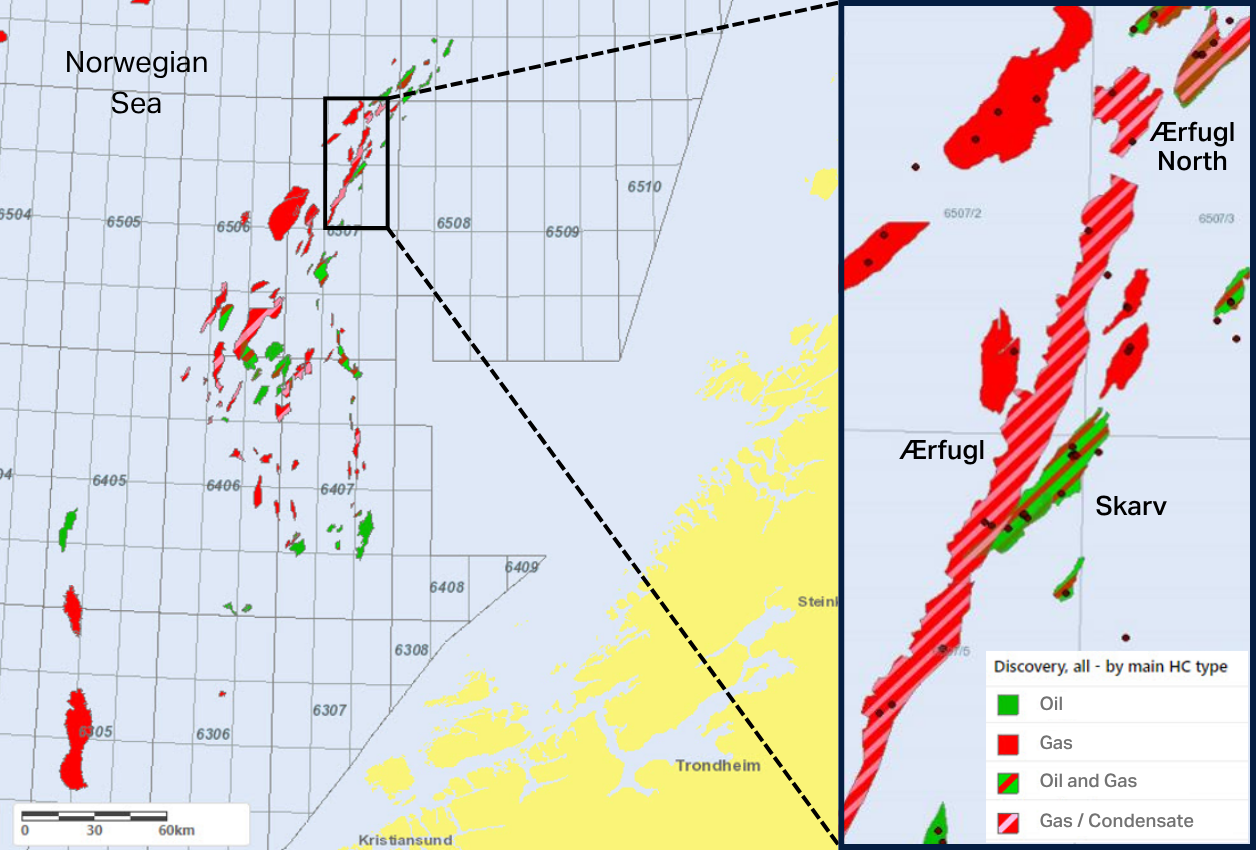
Norwegian Sea, Norway
Survey
Skarv / Ærfugl
Survey Year
2005, 2017, 2022, 2025
Date Processed
2023, 2025
Acquisition type
4D towed streamer
Survey Size
970 km2
Water depth
350 – 450 m.
Client

The Challenge
Determining Monitoring Value Before Major Investment
Like many mature producing assets, the field presented uncertainty around the value of future seismic monitoring. Previous monitoring efforts had shown limited reservoir response, making it difficult to justify the investment required for another dedicated 4D survey.
Further evidence was needed that production-related changes could be measured before committing to dedicated acquisition.
Imaging Through a Difficult Seismic Environment
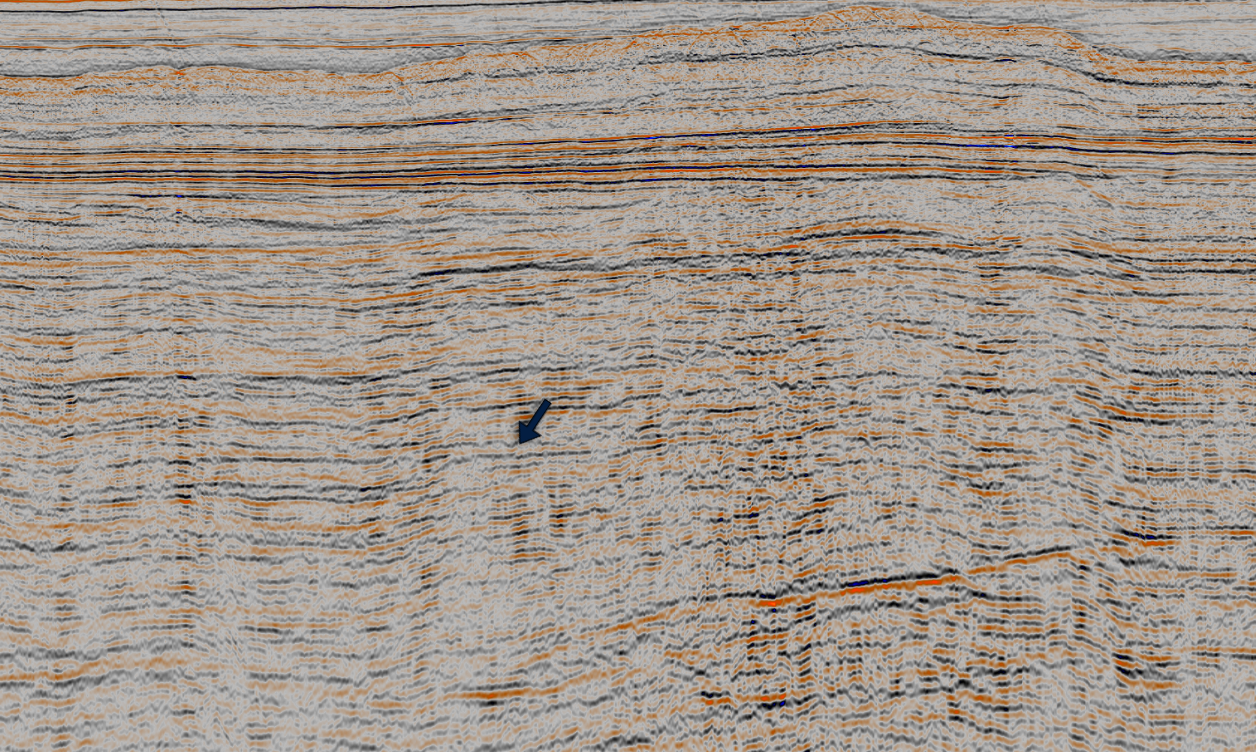
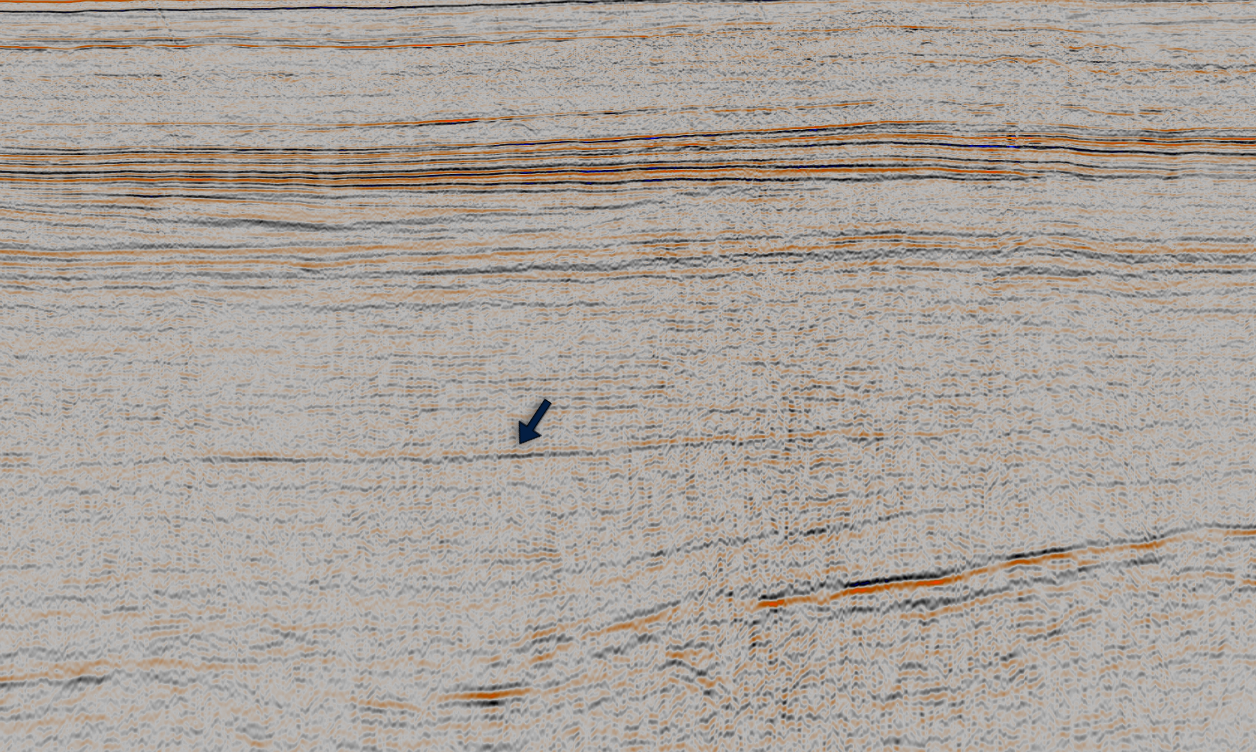
The reservoir is located beneath a hard and locally rugose seabed that generates strong reverberations and complex multiple reflections. These multiples obscure key reservoir events and make subtle time-lapse effects difficult to distinguish from seismic noise.
Detecting Subtle 4D Signal Using
Non-Dedicated Data
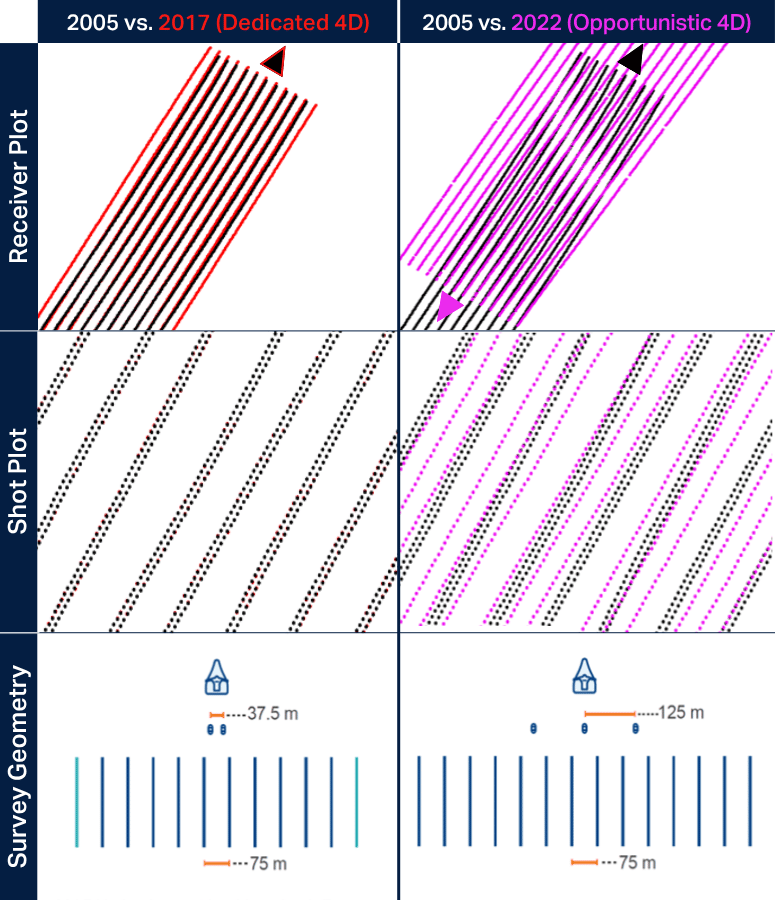
Unlike targeted 4D surveys, the available multi-client dataset was not originally acquired for repeatability.
Differences in acquisition geometry, source configuration and survey design can introduce additional complexity to 4D imaging. At the same time, expected production-related changes were subtle, producing primarily amplitude variations rather than large time shifts.

The Solution
Data
- Baseline: 2005
- Monitors: 2017, 2022 (opportunistic), 2025
Acquisition Solution(s)
Imaging Solutions
Data Management
Opportunistic Data
TGS implemented an opportunistic 4D workflow designed to determine whether meaningful reservoir monitoring information could be extracted from existing multi-client data. All vintages were jointly reprocessed from raw data to maximize repeatability and consistency. Advanced multiple attenuation, wavelet matching, designature, denoising, time-shift correction and 4D-specific processing techniques were applied to isolate genuine reservoir signals. The resulting interpretation was then tested against a TGS dedicated 2025 monitor survey acquired in order to validate potential opportunistic findings.

The Results
4D Signals Detected in Opportunistic Monitor
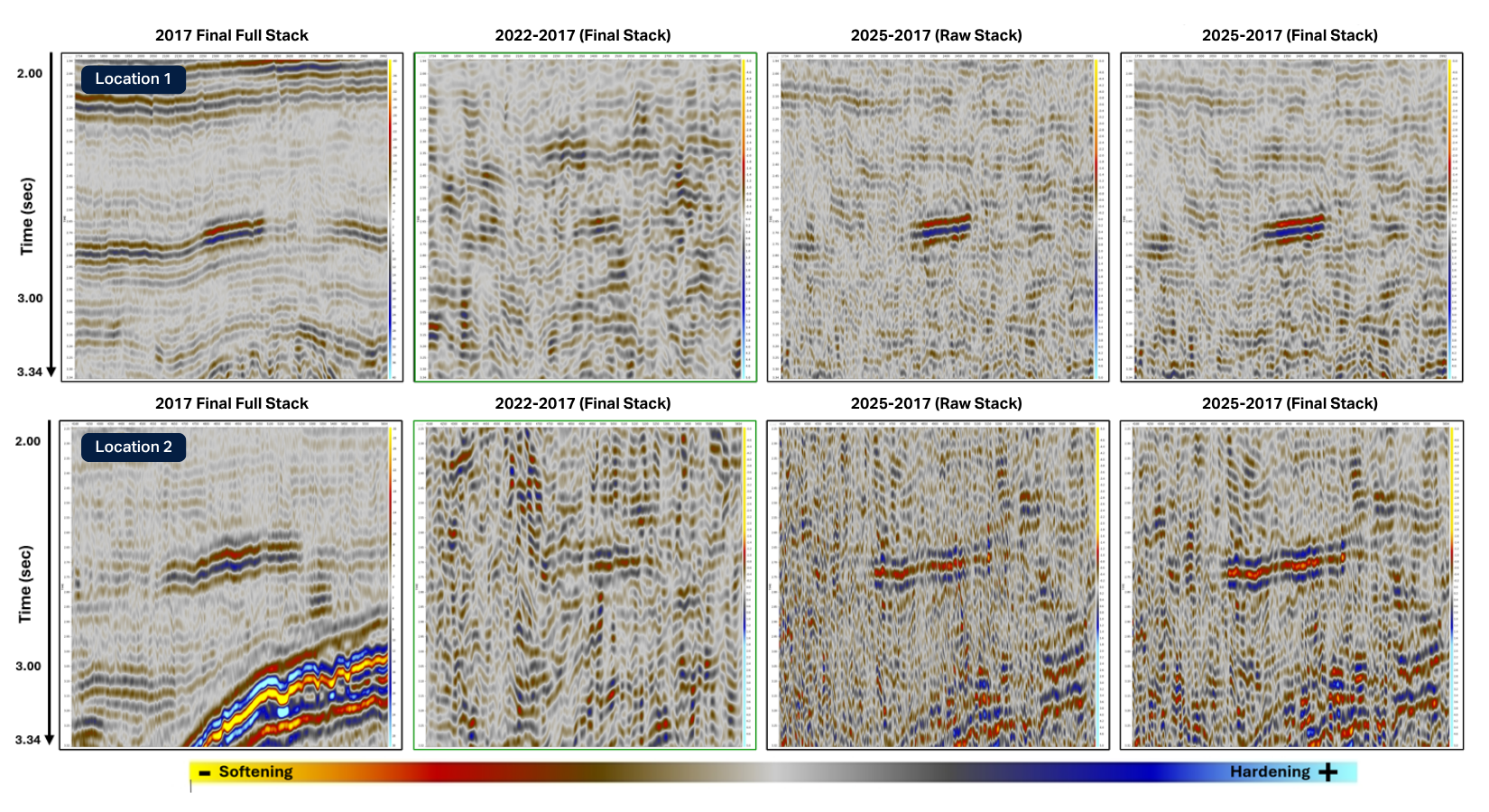
The opportunistic 2017-2022 comparison detected potential hardening and softening responses at key well locations. Hardening associated with water replacing gas and softening associated with gas movement were identified despite significant differences in acquisition between the surveys.
The findings demonstrated that non-repeated multi-client data can provide cost-effective, valuable initial screening into reservoir behavior.
Advanced Demultiple and Imaging Workflows
A comprehensive demultiple sequence was implemented, including multiple modeling, adaptive subtraction, denoise technologies and PSDM quality-control products throughout processing. Processing parameters were continuously validated with the client using the 4D differences to ensure suppression of acquisition-related noise while preserving subtle reservoir responses.
Clear Definition of Opportunistic 4D Value
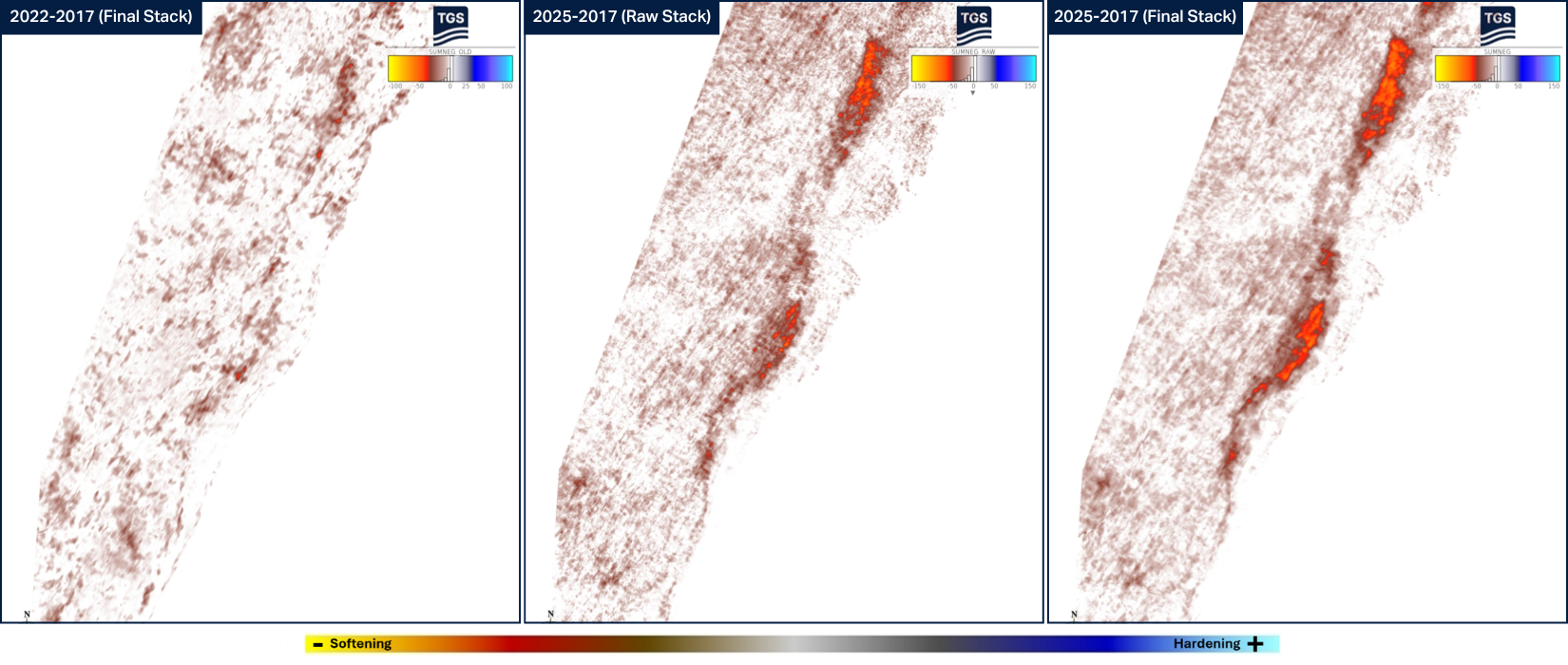
The 2025 monitor survey established a clear distinction between opportunistic and dedicated monitoring. Opportunistic 4D proved effective for screening, feasibility assessment and identifying potential reservoir changes at a lower cost. However, the dedicated survey delivered superior repeatability, stronger signal-to-noise ratio and greater confidence in interpretation.
While opportunistic data helped guide expectations, the dedicated monitor provided the reliability needed for reservoir management decisions.
Conclusion
The Ærfugl case study demonstrates that opportunistic 4D can detect production-related 4D signals from existing multi-client seismic surveys, even in a geologically challenging environment with weak signals and significant acquisition differences.
The study shows that opportunistic 4D can be an effective tool for assessing seismic monitoring feasibility, while dedicated 4D remains the benchmark for high-confidence reservoir surveillance and decision-making.
Commercial Impact

Reduced Investment Risk
Demonstrated the potential value of seismic monitoring before committing to a dedicated 4D acquisition.
Maximized Existing Data Value
Validated Monitoring Feasibility
Enabled Early Reservoir Insight
Defined Appropriate Use Cases
Acknowledgements
TGS thanks Aker BP and license partners Equinor Energy AS,
ORLEN Upstream Norway AS and Harbour Energy Norge AS for
permission to publish this work.