


-
DAS VSP Monitoring
-
UHR3D
DAS VSP Monitoring

DAS least-squares joint imaging of multiples and primaries (synthetic example SEAM 1 model). When utilizing sea surface down-going multiples the imaging area around a vertical optical fiber increases (5 km radius here). Local geology determines area imaged, in most cases, it will image the area of a CO₂ plume after 25-year injection.
Leveraging Fiber Optic Technology
TGS seismic imaging supports cost-effective 4D CO₂ “in well” or "on seafloor” fiber optic monitoring solutions (DAS VSP). The resultant time-staggered datasets can cover the 4D needs for the injected CO₂ plume for two decades or more, reducing the cost of the overall monitoring program.
- Reduces acquisition risk and delivers a robust 4D solution
- Low cost and effective for life-of-well solution
- Technology is already widely adopted within oil and gas
UHR3D
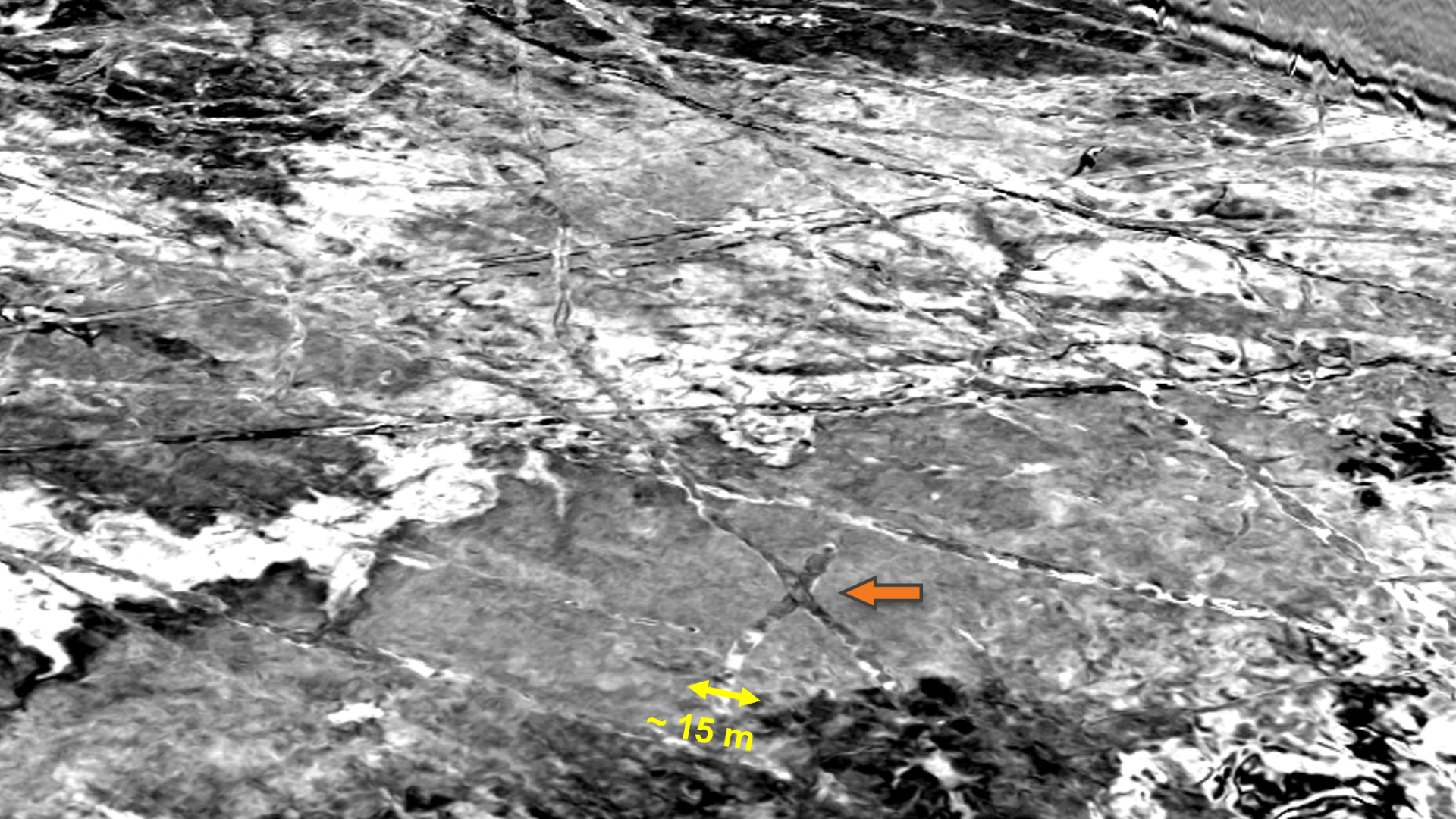
Ultra High-Resolution 3D (UHR3D)
Ultra High-Resolution 3D (UHR3D) seismic provides a flexible and repeatable solution for characterizing carbon storage sites and monitoring injected CO₂ through time-lapse 4D seismic. High-resolution imaging strengthens overburden assessment, supports early risk identification and provides greater confidence in long-term containment integrity.
- Designed to enable geophysical early phase 3D mapping and 4D monitoring of injected CO₂
- De-risk the overburden with enhanced imaging resolution
- Pair with ocean bottom nodes (OBN) for velocity information
- Cost-efficient, consistent repeatability