


Production data from key formations since 2021 shows that a small cluster of counties now drive the majority of supply, underscoring the strategic value of geology.
U.S. natural gas production is projected to reach record highs in 2026 and 2027, but the path to those records is far more concentrated than many assume. Analysis of TGS Data from 16,000 wells in the key gas formations of the Appalachian, Haynesville, and Permian basins (Figure 1) shows that 11 counties account for 72% of total production from all counties with activity in these formations since 2021 (Figure 2). In other words, America’s supply growth is not broad-based; it is increasingly dependent on a small set of high-performing counties with favorable geology, longer laterals, and thick, high-pressure pay zones.
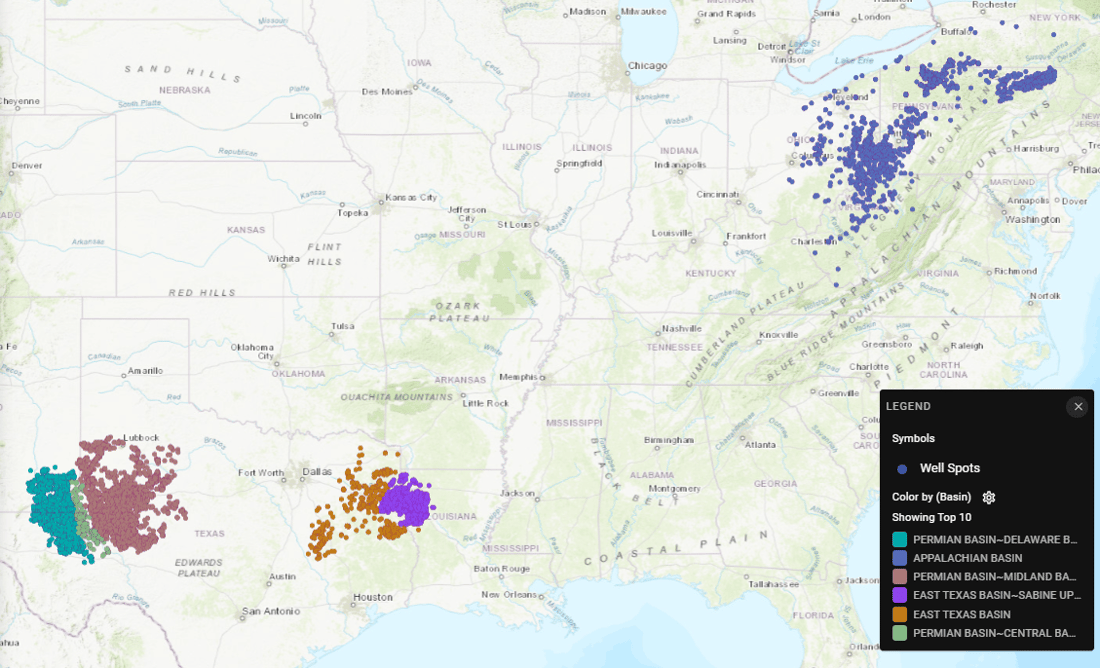
Figure 1. Appalachian, Haynesville, and Permian basins.
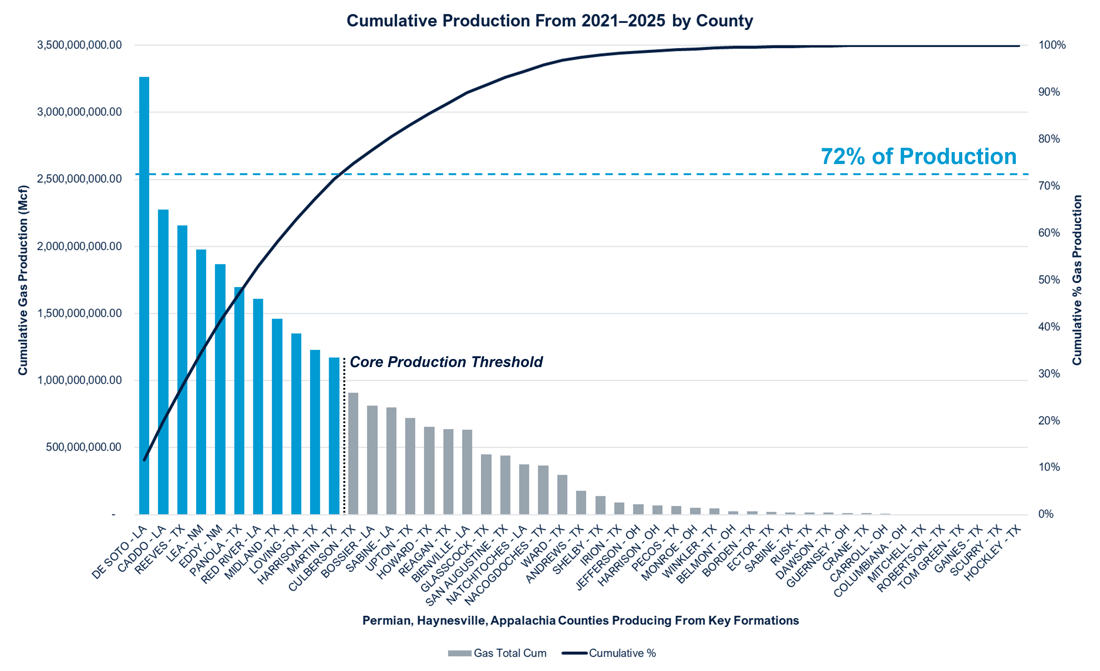
Figure 2. Cumulative gas production from key formations since 2021 ranked by county. Eleven core counties account for 72% of total production across all producing counties, highlighting the structural concentration of U.S. gas supply growth.
The concentration of production has clear geological and economic drivers. Core wells in top Haynesville and Marcellus counties deliver EUR/ft uplifts of 17–20% above basin averages, with IP30 rates exceeding 100,000 BOE in Haynesville and 122,000 BOE in Bossier wells. Lateral lengths have steadily expanded across basins, now averaging over 11,000 feet in 2025 in some counties, increasing reservoir exposure and supporting higher recoveries. In Haynesville and Bossier formations, pressure gradients of 0.80–0.95 psi/ft and net thickness ranging from 150 to 350 feet further enhance early-time productivity. Yet despite these geological advantages, median IRRs and NPV/Capex ratios (~0.46–0.47) suggest that while core wells drive volume, capital efficiency gaps between core and non-core acreage are narrower than production metrics alone might imply.
As production moves toward projected record levels in 2026 and 2027, sustaining growth will depend less on expanding the drilling footprint and more on optimizing development within this concentrated core. Our dataset indicates that incremental output outside top-tier counties declines quickly and rarely matches basin averages. That means the trajectory toward record supply is structurally tied to a limited geographic footprint. For operators, investors, and policymakers, the implication is clear: America’s gas future will be shaped not by drilling everywhere, but by maximizing performance where geology consistently delivers — in the handful of counties that now anchor the nation’s supply growth.
For more information about TGS Data or to schedule a demo, please contact us at WDPSales@tgs.com.