


Lower water intensity and stronger normalized productivity are driving renewed operator interest in the Midland Basin Barnett.
Nearly two decades after igniting the shale revolution in the Fort Worth Basin, the Barnett Shale is re-emerging, this time in the deeper intervals of the Midland Basin. As traditional Permian targets such as the Wolfcamp, Spraberry, and Bone Spring mature and water production continues to rise, TGS Well Data Analytics reveals a notable shift: operators are filing significantly more Barnett permits. Over the past two years, Midland Basin Barnett permitting activity has surged, with a 100% increase in 2025 compared to 2024 (Figure 1).
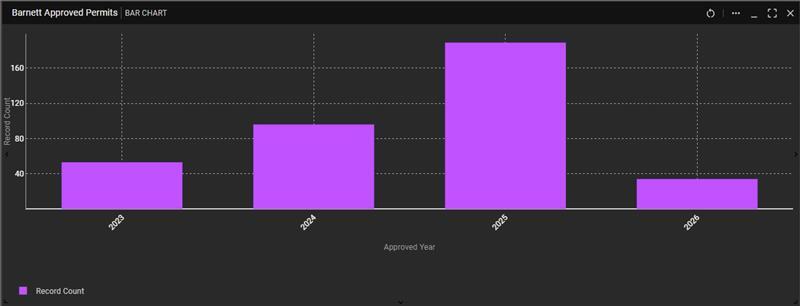
Figure 1. The TGS Well Data Analytics application displays approved Barnett permit activity across Andrews, Martin, Ector, Midland, and Crane counties.
Early performance data suggests the renewed interest may be justified. The Midland Barnett is delivering stronger normalized oil performance while producing materially lower water volumes. An analysis of approximately 80 recent Barnett wells across the core Midland fairway shows peak production of roughly 3.0 BOE per lateral foot, compared to 2.3 BOE/ft for Spraberry and 1.6 BOE/ft for Wolfcamp wells. At the same time, Barnett wells are generating significantly lower water cuts. As operators confront rising water management costs and the gradual depletion of Tier-1 drilling inventory, these performance contrasts are drawing renewed attention to the deeper Barnett interval.
TGS geological and petrophysical mapping further refines where this opportunity is concentrated. While the USGS estimates 28 TCF of gas and 1.6 billion barrels of technically recoverable liquids across the Permian Barnett and Woodford, TGS stratigraphic models and log-based mapping indicate that the most prospective Midland Barnett fairway is concentrated in Andrews, Martin, Ector, Midland, and Crane counties (Figure 2). In the Midland Basin, the Barnett ranges from 100–350 feet thick at depths between 9,000 and 12,000 feet, with estimated pore pressures of 5,000–8,000 psi, substantially higher than the original Fort Worth core. These elevated pressure regimes, combined with high-resistivity intervals and interfingered carbonates, help explain the strong early oil recoveries observed in recent completions.
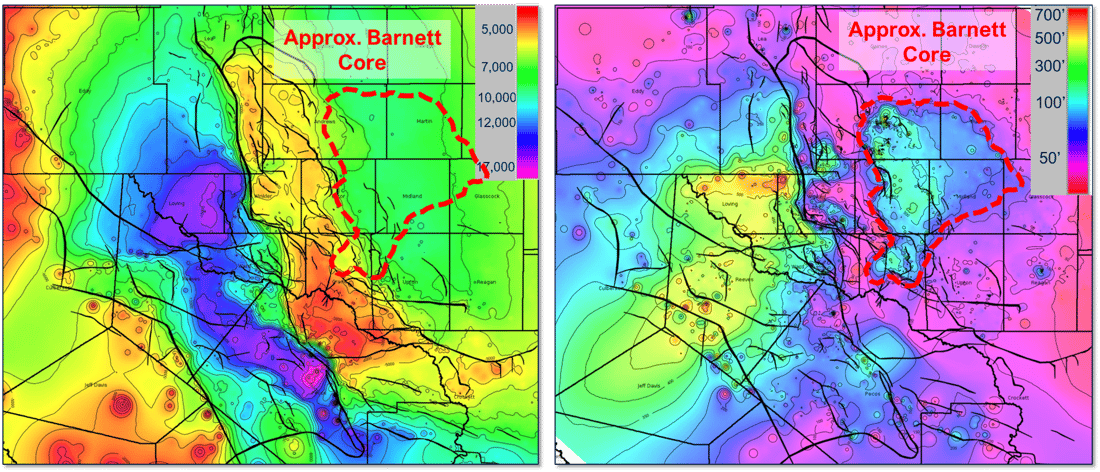
Figure 2. Barnett Depth Structure (left) and Barnett Isopach Thickness (right), Source: TGS Strat Model.
Activity has accelerated meaningfully over the past two years. Testing expanded in 2024, and 2025 wells are tracking even higher productivity. Occidental’s early 2025 wells in the Emma field demonstrate strong internal rates of return and competitive breakeven economics (Figure 3). Meanwhile, Continental Resources’ Cobb Pool 3724A 01H in the Peart-Barnett field, an approximately 18,000-foot lateral, ranks among the top performers based on 90-day oil IP. Public disclosures from Diamondback Energy reinforce the trend, with early Barnett wells tracking near 75 barrels of oil per lateral foot compared to roughly 50 bbl/ft in overlying Midland inventory. On a BOE basis, recoveries are reportedly about 70% higher than core legacy zones.
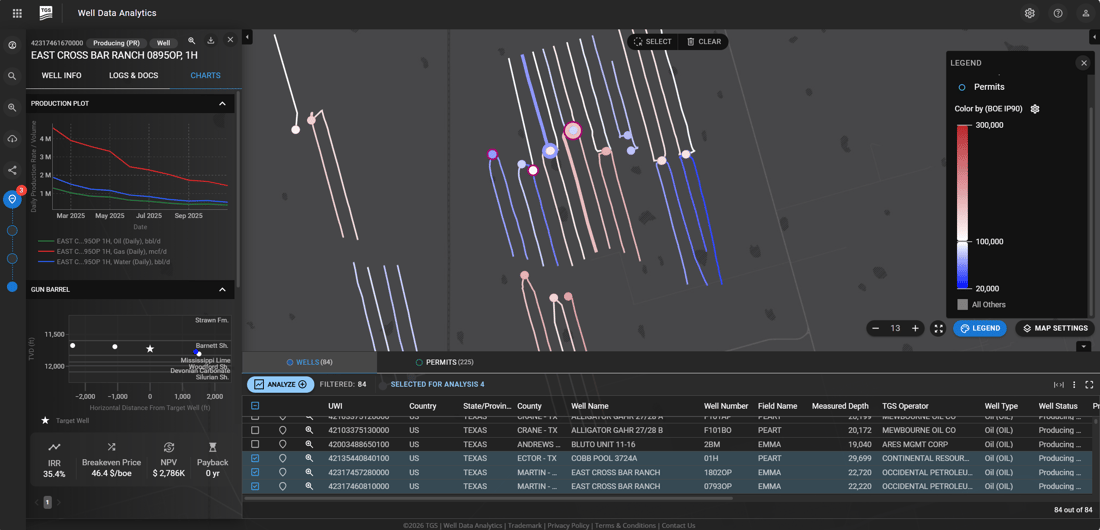
Figure 3. The TGS Well Data Analytics application shows active producing wells since 2024 in the Emma and Peart fields, color-coded by BOE IP90.
TGS data comparing approximately 80 Emma and Peart-Barnett wells brought online in 2024 and 2025 highlights meaningful differentiation within the play. Wells in the Emma field show higher initial BOE rates and significantly lower water production compared to Peart (Figure 4). This performance gap aligns with recent permitting trends, where approved permit activity has been more concentrated in Emma than Peart over the past year (Figure 5). These insights underscore the importance of localized stratigraphy, pressure regime, and development sequencing in unlocking Barnett economics.
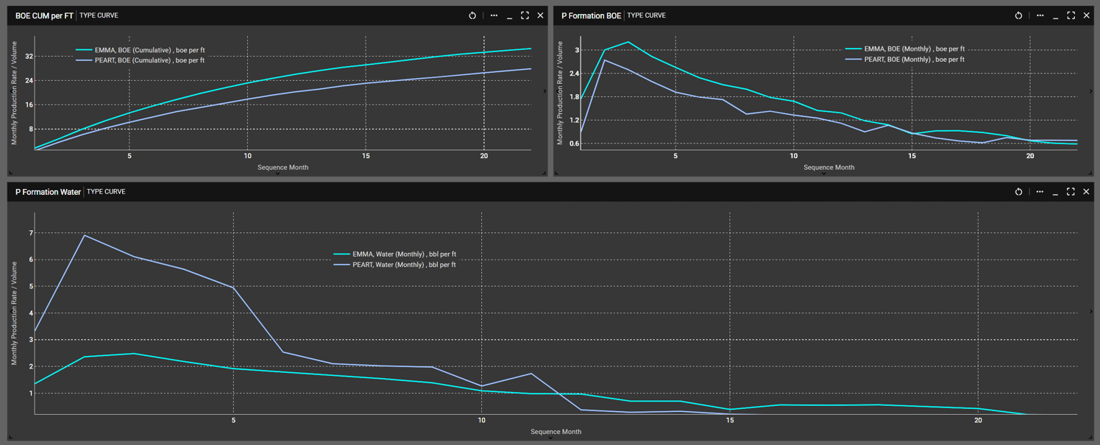
Figure 4. The TGS Well Data Analytics application type curve comparisons for wells in the Emma and Peart fields.
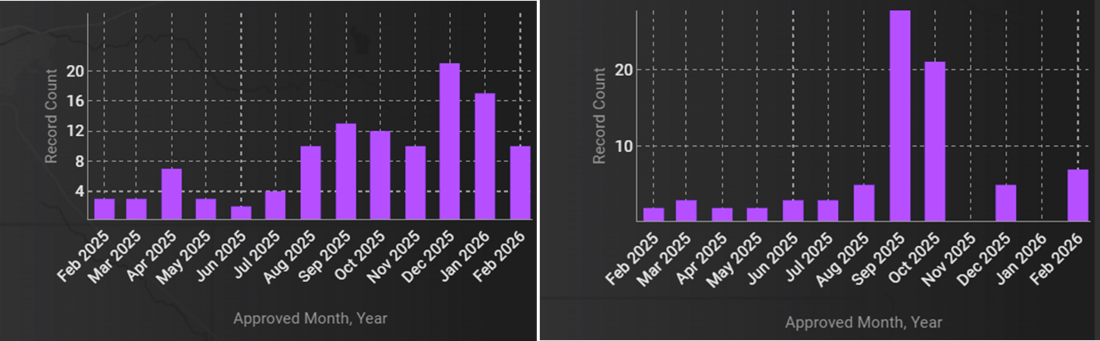
Figure 5. The TGS Well Data Analytics application approved permit activity over the past year, comparing wells in the Emma field (left) and the Peart field (right).
Beyond productivity metrics, basin-wide analysis from TGS Well Data Analytics identifies water intensity as a key structural driver behind the renewed interest in the Barnett interval. Between 2005 and 2025, primary Permian targets have experienced roughly a 120% increase in water-oil ratios, significantly raising operating and disposal costs across the basin.
In comparison, Barnett wells demonstrate materially lower water production. On average, Barnett wells produce about 44% water cut, compared to 64% in Spraberry wells and 74% in Wolfcamp wells. Lower water volumes translate directly into reduced disposal requirements and lower variable operating expenses, an increasingly important advantage as water handling becomes a major economic constraint throughout the Permian Basin.
While Barnett economics remain somewhat commodity-sensitive, particularly given the interval’s higher gas-oil ratios, the combination of lower water burden and improving normalized recoveries positions the formation competitively in balanced pricing environments. As additional pipeline infrastructure is developed and takeaway capacity expands, the economic outlook for the Midland Barnett could become even more favorable.
The key takeaway is clear: the Permian Basin is entering a deeper phase of optimization. As Wolfcamp and Spraberry development matures and water management challenges intensify, the Midland Barnett offers a technically differentiated, oil-competitive, and lower-water alternative within existing infrastructure footprints. It is not a universal replacement for legacy benches, but in the right counties, pressure regimes, and market conditions, it represents a compelling next phase of Permian development. TGS Well Data Analytics enables operators to benchmark these deeper targets rapidly, integrating stratigraphy, completion design, production performance, and economics within a single workflow to support informed capital allocation decisions.
With TGS Well Data Analytics, this type of comparative analysis and benchmarking can be done in minutes. For more information about TGS Well Data Analytics or to schedule a demo, please contact us at WDPSales@tgs.com.